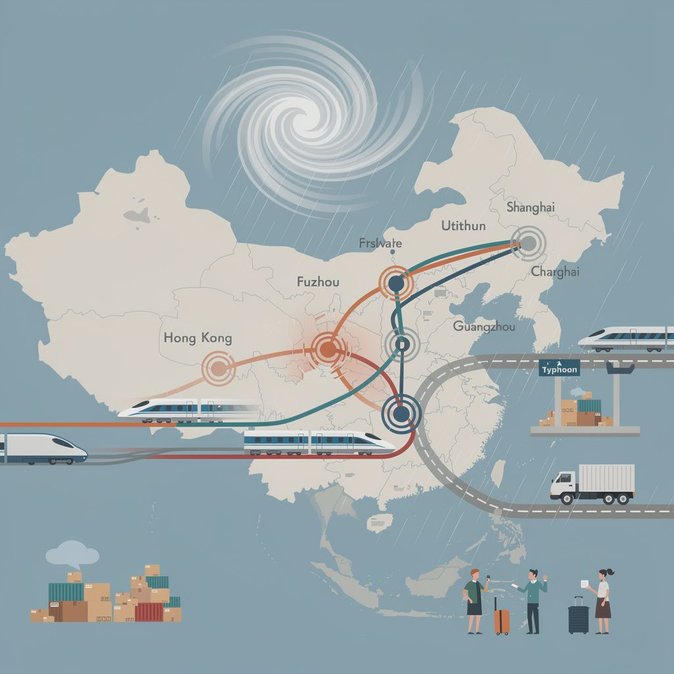
Air services were not the only casualty of the weekend storm. The MTR Corporation confirmed that ten high-speed rail (HSR) services between West Kowloon Station and the mainland cities of Shanghai, Fuzhou and Guangzhou were cancelled on Saturday, with a further eight services scrubbed for Sunday. Rail operators cited safety protocols that require track inspections after heavy rain and wind gusts exceeding 90 km/h. For cross-border commuters and manufacturers that depend on just-in-time deliveries along the Guangzhou-Shenzhen-Hong Kong corridor, the shutdown is highly disruptive. Logistics brokers report that southbound cargo normally loaded onto evening HSR wagons is now being rerouted to trucking firms via the Shenzhen Bay Port—adding customs-clearance steps and up to 12 hours’ delay. Multinationals with facilities on both sides of the border have activated Business Continuity Plans, shifting key personnel meetings to video conference and rescheduling site visits. The suspensions also test Hong Kong’s ambition to promote “seamless clearance” at land crossings. The Immigration Department’s new e-Channel Fast-Track system—due to launch at the Hong Kong-Zhuhai-Macao Bridge this quarter—aims to maintain people and cargo flows during adverse weather, but rail remains a pinch point. Transport economists argue that creating parallel bus or ferry contingencies could soften future shocks. HSR tickets purchased through the 12306 platform will be fully refunded or rebooked within 30 days, while passengers who bought via Hong Kong travel agencies must apply in person within seven days. Corporations should remind travelling staff to keep digital copies of unused tickets for expense-claim auditing. Weather permitting, the first northbound train is slated to depart West Kowloon at 07:25 on Monday, but rail officials warn of possible speed restrictions that could lengthen journey times. Mobility managers should factor lingering delays into deployment schedules for at least 48 hours after services resume.
Source: South China Morning Post