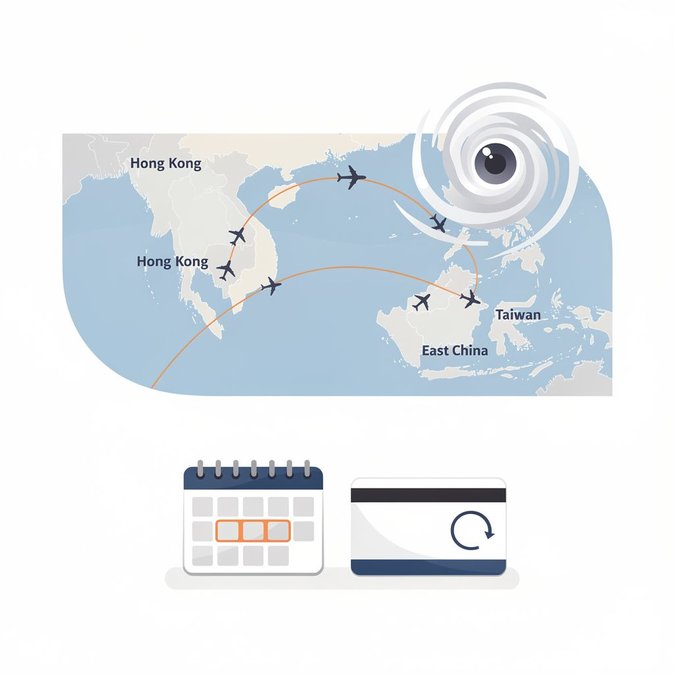
At 08:00 on Sunday, 12 July, the Hong Kong Observatory reported Severe Tropical Storm Bavi located about 1 010 km north-northeast of the city. Although Bavi made landfall near China’s Zhejiang coast overnight and has been downgraded, forecasters kept the Strong Monsoon Signal in force, warning that occasional gale-force gusts could still affect aviation and maritime operations. Regional ripple effects were immediately felt: mainland authorities cancelled more than 650 flights at Shanghai’s Pudong and Hongqiao airports, while Taiwan reported 134 weather-related injuries. Hong Kong carriers consequently extended weather waivers for passengers transiting through Shanghai and Ningbo, allowing free rebooking within a two-week window. For Hong Kong-based corporates, Sunday’s bulletin is a reminder that disruptions can persist even after a storm exits the city’s immediate area. Travel-risk consultants recommend that firms keep “return-to-operations” checklists handy: confirm the reopening of immigration counters, verify that the Airport Express is running at normal frequencies, and double-check crew duty-time limits that might further delay outbound flights. The Observatory expects the strong-wind signal to remain at least until Monday morning. If wind speeds drop below the prescribed thresholds, authorities could downgrade to the standby signal early on 13 July—paving the way for a gradual resumption of full flight schedules and the lifting of precautionary speed limits on cross-harbour bridges. While Bavi has highlighted the exposure of Hong Kong’s mobility infrastructure to distant storm systems, it also underlines the value of diversified routing options for business travellers—especially those connecting through Shanghai, Taiwan or Japan, where cascading delays can reverberate across corporate travel calendars.