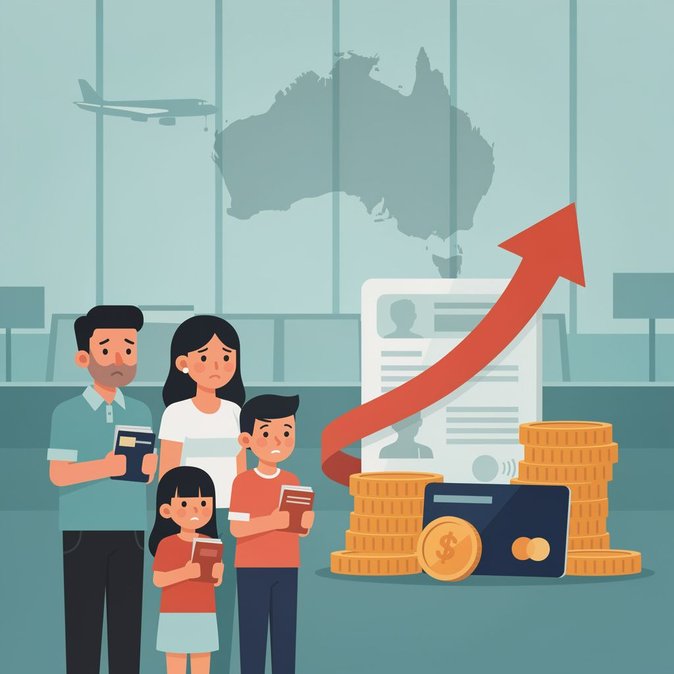
'You’ve got no choice'—that sentiment runs through dozens of interviews SBS News conducted with permanent residents after the Resident Return Visa (subclass 155/157) fee leapt overnight from A$490 to A$1,475 on 1 July. Published on 13 July 2026, the feature highlights how the hike hits migrants who cannot hold dual citizenship and therefore need the five-year RRV to keep travelling for work or family reasons. South Korean, Indian and Japanese nationals are disproportionately affected because their home countries prohibit dual nationality. A Melbourne couple told SBS they now face almost A$3,000 every five years just to visit relatives abroad. Migration agents say the cost could dampen mobility, discourage permanent residents from accepting overseas secondments and—ironically—push some to abandon Australian residency altogether. Home Affairs defends the increase as part of a broader realignment of visa pricing with ‘national-interest priorities’, but provides no modelling on behavioural impacts. Employers with large PR workforces, especially in tech and healthcare, are scrambling to update travel policies; some are offering to reimburse the new fee when staff undertake company-mandated trips. Community representatives warn that the measure undercuts Australia’s multicultural narrative and may widen inequities between migrants from high- and low-income countries. A Change.org petition demanding a reversal has already surpassed 32,000 signatures, signalling potential political heat if the Senate crossbench pursues a disallowance motion when Parliament returns.
Source: SBS News