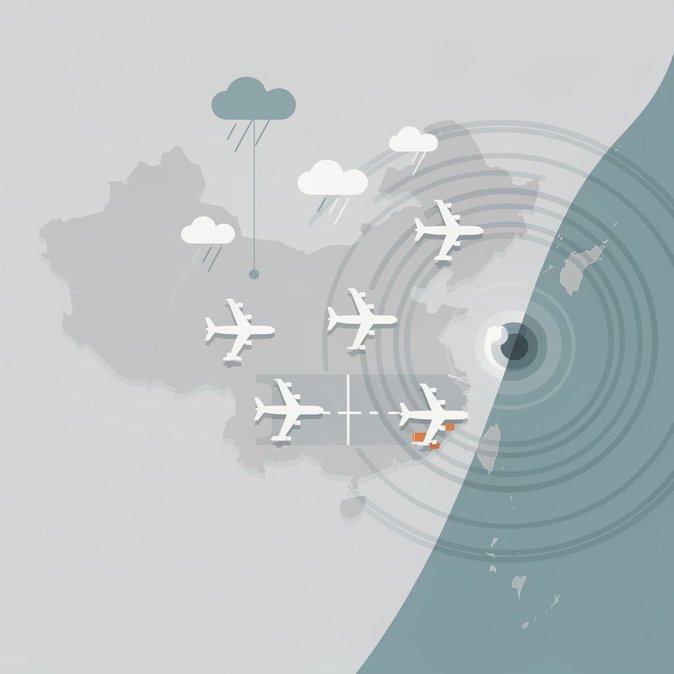
China’s summer typhoon season delivered another reminder of its impact on mobility, with airlines scrapping roughly 100 departures and arrivals at mainland airports on Monday, July 13, according to real-time data from aviation tracker VariFlight cited by state broadcaster CCTV. The heaviest cancellations were logged at Hefei Xinqiao, Nanjing Lukou, Beijing Capital, Shanghai Pudong and Shanghai Hongqiao airports as remnants of Typhoon Bavi brought gusty cross-winds and heavy rain across the Yangtze River Delta and North China Plain. Operations at several coastal airports had already been curtailed over the weekend, but carriers said most schedules should normalise by Tuesday as weather systems move inland and weaken. Corporate travel managers are advised to monitor China’s civil-aviation notice system (NOTAM) and maintain alternative rail plans for critical staff transiting the affected airports. Employers should also remind travellers that same-day rebooking can be challenging when multiple carriers invoke weather waivers simultaneously; early engagement with TMCs and use of airline apps for self-service changes can minimise downtime. Longer term, the episode highlights the growing need for contingency planning as climate-linked weather volatility increases. Companies with large China footprints are increasingly adding typhoon-response clauses to travel insurance and leveraging flexible-working policies to keep projects on track when flights are grounded.
Source: Hangzhou.com.cn (via CCTV)