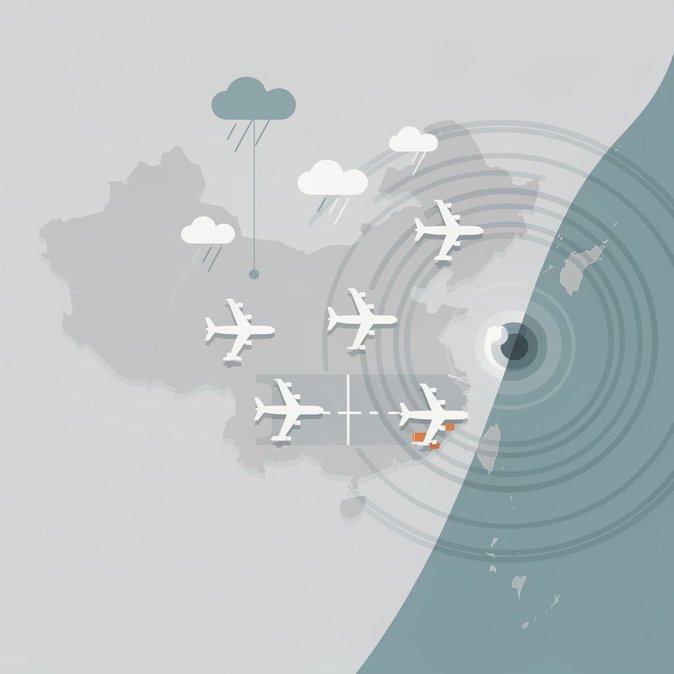
Super-typhoon “Bavi” made twin landfalls in Zhejiang late on 11 July and into the early hours of 12 July, prompting airlines to cancel more than 1,000 flights across Shanghai, Hangzhou, Ningbo, Wenzhou and other east-coast hubs. Shanghai Pudong and Hongqiao alone scrapped 653 departures and arrivals, while Hangzhou Xiaoshan axed 327 services—over 60 percent of its daily schedule. Smaller regional airports such as Zhoushan’s Putuoshan and Taizhou’s Luqiao reached cancellation rates above 70 percent. As the storm track shifted inland, carriers began restoring operations, but disruption lingered. Civil-aviation data published at 07:44 on 13 July show roughly 100 additional cancellations for the day as crews and aircraft repositioned and airports inspected runways for debris. The Central Meteorological Observatory downgraded warnings, yet authorities urged travellers to monitor real-time alerts and allow extra buffer for knock-on delays. Beyond aviation, Typhoon Bavi rippled through surface transport. Nanjing Metro closed its airport link, and Shanghai Railway suspended dozens of high-speed services before gradually resuming traffic on the Beijing-Shanghai and Hangzhou-Taipei corridors. Freight forwarders reported temporary hold-overs of perishables at Pudong Cargo Village, underscoring the need for contingency cold-chain capacity. For businesses the storm highlights the value of multi-modal back-ups. Firms with crews transiting via Hong Kong could still reach central China by high-speed rail within 24 hours, while some executives diverted to inland airports such as Hefei and took car transfers to coastal factories. Mobility teams should revisit severe-weather playbooks, ensure staff enrol in CAAC flight-status SMS services, and pre-arrange accommodation blocks near secondary airports for future typhoon season, which peaks through September.