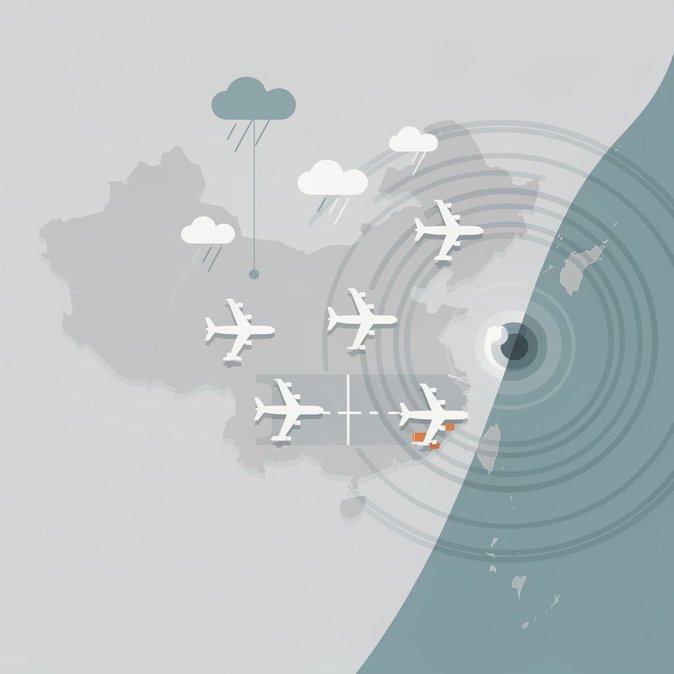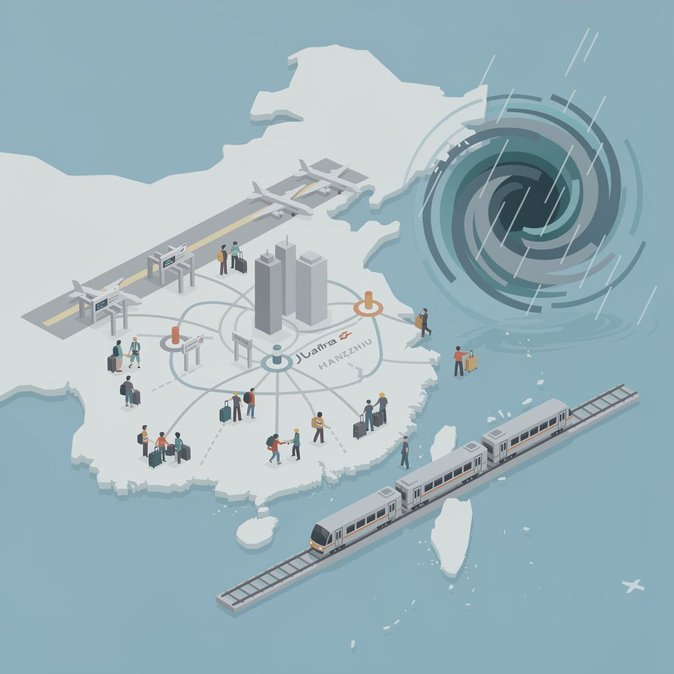
Typhoon Bavi — the most powerful storm to strike the Chinese mainland so far this year — made two landfalls late on 11 July in Zhejiang’s Yuhuan and neighbouring Yueqing before pushing inland on 12 July. Wind gusts exceeding 140 kph toppled more than 1,300 trees, flooded streets and triggered landslides, prompting local authorities to evacuate almost two million residents across Zhejiang and neighbouring provinces. China’s civil-aviation regulator ordered large-scale flight cancellations at Hangzhou, Ningbo and Wenzhou, while Shanghai’s two airports scrapped 684 flights and railway operators suspended over 1,600 services. Business travellers heading for the Yangtze River Delta — China’s largest commercial cluster — faced 24- to 48-hour delays as carriers invoked fee-free rebooking and refund policies. Logistics companies reported backlog risks for time-sensitive cargo moving through the region’s ports and airports. Meteorologists warn that Bavi’s expansive circulation will continue to dump torrential rain as it tracks north-east toward the Yellow Sea, affecting supply chains that rely on the coastal expressway and the Beijing–Harbin rail corridor. Companies with expatriate staff were advised to activate remote-working plans and confirm emergency contacts, while insurers flagged potential claims for damaged facilities. For global-mobility managers, the storm underscores the importance of China-specific contingency plans: the country’s extreme-weather season has lengthened in recent years, and local governments now impose pre-emptive shutdowns to minimise casualties. Firms should maintain up-to-date traveller tracking, use Chinese social-media channels such as Weibo for rapid alerts, and budget extra lead-time when routing personnel or goods through East-China hubs during the July-October typhoon window.
Source: Reuters