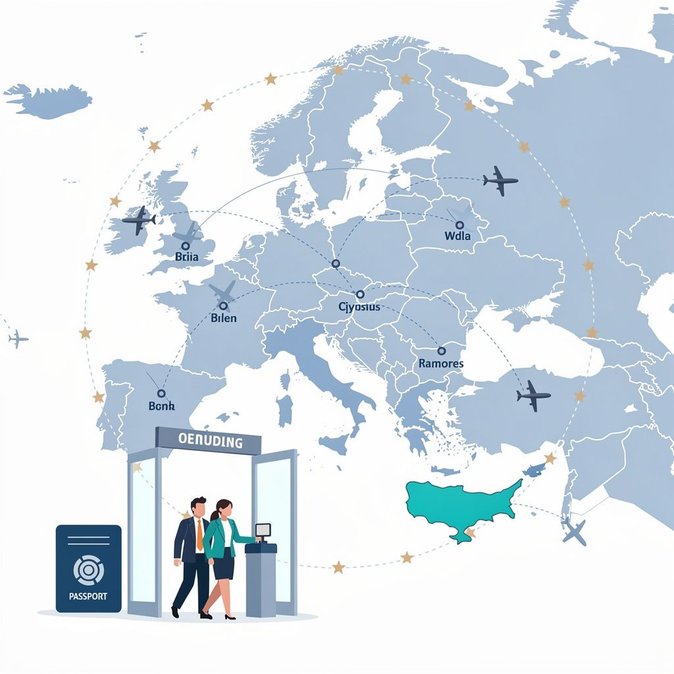
The long-awaited Schengen evaluation of the Republic of Cyprus has finally been published – and it is positive. In a 60-page report circulated to EU capitals late on 12 July, Commission inspectors conclude that Cyprus “meets the necessary conditions for the full application of the Schengen acquis”, from border-control infrastructure at Larnaca and Paphos airports to information-system connectivity and visa-issuing practice. Although politically sensitive questions remain – most notably how the so-called “green line” that separates the island’s two communities and the UK’s sovereign base areas will be managed – the Commission stressed that these issues are not an obstacle at the level of technical readiness. Officials noted that Cyprus has closed some 120 recommendations since the 2021 desktop review, upgraded its Visa Information System interface and is on track to connect to EES, ETIAS and EURODAC by the fourth quarter of 2026. Membership would transform business travel to and from Cyprus. Passport checks on flights to Schengen states would disappear, cutting connection times at hubs such as Frankfurt, Paris-CDG and Amsterdam. Third-country nationals holding a Cypriot residence permit would gain Schengen-wide mobility for short stays – a competitive advantage for multinationals basing regional staff on the island. Airlines and tour operators are already planning schedule adjustments for the lucrative UK–Cyprus market once the new rules kick in. The hurdle now is political. Accession requires unanimous approval by the EU Council. Diplomats in Brussels recall that Bulgaria and Romania waited over a decade after receiving positive technical evaluations. Cypriot Foreign Minister Constantinos Kombos is launching a diplomatic blitz to secure a vote before the end of 2026, arguing that the island’s geostrategic role, recent progress on migration control and its robust use of EU information systems make a compelling case. Corporate mobility managers should monitor the timeline closely. If Council approval is secured this autumn, carriers will need to re-configure arrival flows at EU airports as early as spring 2027, and assignees holding Cypriot permits can begin to plan visa-free business trips across the bloc.
Source: Lenta Cyprus