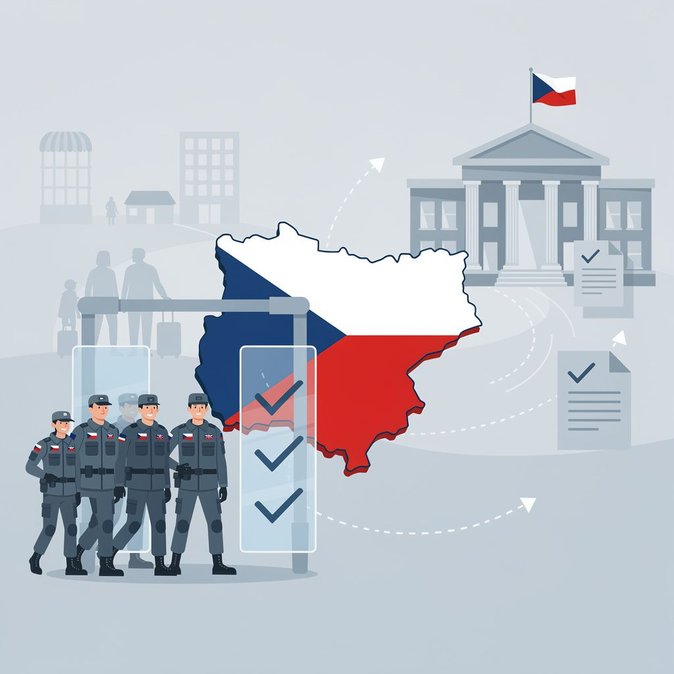
At its 13 July 2026 cabinet meeting, the Czech government approved a long-anticipated bill that overhauls the legal conditions under which allied armed forces may enter, stay and carry out training on Czech territory. The draft – listed on Monday’s agenda as item 6 and now headed to Parliament – lays down a single, comprehensive set of rules for short-term exercises, rotational deployments and long-term basing agreements concluded under NATO’s Status of Forces Agreement (SOFA) and the recently ratified Czech-US Defence Cooperation Agreement. The measure replaces a patchwork of ministerial decrees dating back to the 1990s and introduces a “fast-track” electronic authorisation system for troop movements that will share data automatically with the Czech Alien Police and Customs Administration. Commanders will be able to pre-register personnel and dependants, uploading biometric and vehicle information before arrival; border agencies will receive real-time updates, mirroring systems already used by neighbouring Germany and Poland. According to the Ministry of Defence, this should cut lead-times for large-scale exercises from the current 90 days to as little as three weeks, while maintaining national oversight of health, safety and tax compliance. For foreign service members and their families, the bill creates a new “Visiting Force Residence Permit” valid for up to three years and renewable inside the country. Holders will enjoy simplified access to Czech public health insurance, recognition of driving licences, and the right to engage in remote work for employers based outside Czechia – a nod to the growing number of military spouses in portable professions. Children will be exempt from the Czech language entrance test required of other long-term residents when enrolling in public schools. Business groups welcomed the move, noting that SOFA personnel inject an estimated CZK 6 billion (USD 250 million) into local economies annually through housing, services and travel. “Clear, predictable rules will make it easier for logistics providers, car-rental firms and relocation agencies to plan capacity,” said Petr Novotný, chair of the Czech Association of Relocation Service Providers. Human-rights NGOs, however, urged Parliament to ensure that crimes committed by visiting troops remain prosecutable in Czech courts when host-nation jurisdiction applies. If the bill passes both chambers by October, the new framework could be in force before the large NATO “Steadfast Sentinel 2027” exercise scheduled for next spring, bringing Czech procedures in line with allies and positioning the country as a key hub for Central-European military mobility.
How VisaHQ can help
VisaHQ simplifies the visa application process for individuals and businesses. Check current travel requirements, prepare the required documents and manage your application online through the VisaHQ Czech Republic portal.More From Czech Republic
View all
EU warns Caribbean CIP states over visa-free access, signalling future changes for Czech border checks

Government signs off tourism-strategy progress report; eyes new incentives for regional business events