After nearly a decade of talks, the European Union and the United Kingdom will sign the long-awaited Gibraltar agreement in Brussels on 14 July. Spanish Foreign Minister José Manuel Albares and Gibraltar’s Chief Minister Fabian Picardo will attend the ceremony, which will be followed on 15 July by the provisional application of the treaty and a symbolic act in La Línea de la Concepción where Prime Minister Pedro Sánchez will announce ‘the demolition of the Verja’.
For travelers and businesses alike, understanding new entry requirements can be daunting; VisaHQ makes the process easier by offering real-time guidance and application services for Spain and the wider Schengen area. Their portal helps users determine whether they need a visa, forthcoming ETIAS authorization, or no paperwork at all once the agreement is in force, and provides similar assistance for many other destinations worldwide.
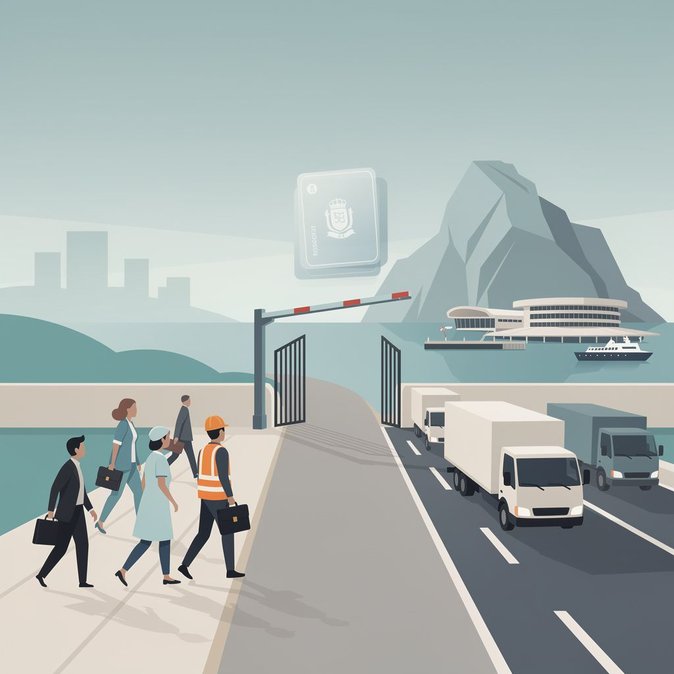
The accord will abolish passport controls at the land border and integrate Gibraltar into the Schengen area, shifting immigration checks to the Rock’s port and airport, where mixed teams of Gibraltarian and Spanish police will operate. Workers and tourists will be able to cross freely, ending daily queues that sometimes stretched for hours and cost businesses an estimated €80 million a year. For Spanish employers, particularly the 15,000 cross-border workers in the Campo de Gibraltar, the change promises smoother commutes, fewer delays and simplified HR procedures, as Schengen rules will replace UK immigration stamps. Logistics firms expect faster movement of goods once customs formalities are streamlined. However, companies should prepare for a transitional period of technical adjustments at Algeciras and Gibraltar airports. Politically, Spain reiterates that the deal does not prejudice its sovereignty claim, but economists forecast a 5 % boost to regional GDP thanks to increased tourism and shared infrastructure projects financed by EU cohesion funds.
For travelers and businesses alike, understanding new entry requirements can be daunting; VisaHQ makes the process easier by offering real-time guidance and application services for Spain and the wider Schengen area. Their portal helps users determine whether they need a visa, forthcoming ETIAS authorization, or no paperwork at all once the agreement is in force, and provides similar assistance for many other destinations worldwide.
The accord will abolish passport controls at the land border and integrate Gibraltar into the Schengen area, shifting immigration checks to the Rock’s port and airport, where mixed teams of Gibraltarian and Spanish police will operate. Workers and tourists will be able to cross freely, ending daily queues that sometimes stretched for hours and cost businesses an estimated €80 million a year. For Spanish employers, particularly the 15,000 cross-border workers in the Campo de Gibraltar, the change promises smoother commutes, fewer delays and simplified HR procedures, as Schengen rules will replace UK immigration stamps. Logistics firms expect faster movement of goods once customs formalities are streamlined. However, companies should prepare for a transitional period of technical adjustments at Algeciras and Gibraltar airports. Politically, Spain reiterates that the deal does not prejudice its sovereignty claim, but economists forecast a 5 % boost to regional GDP thanks to increased tourism and shared infrastructure projects financed by EU cohesion funds.