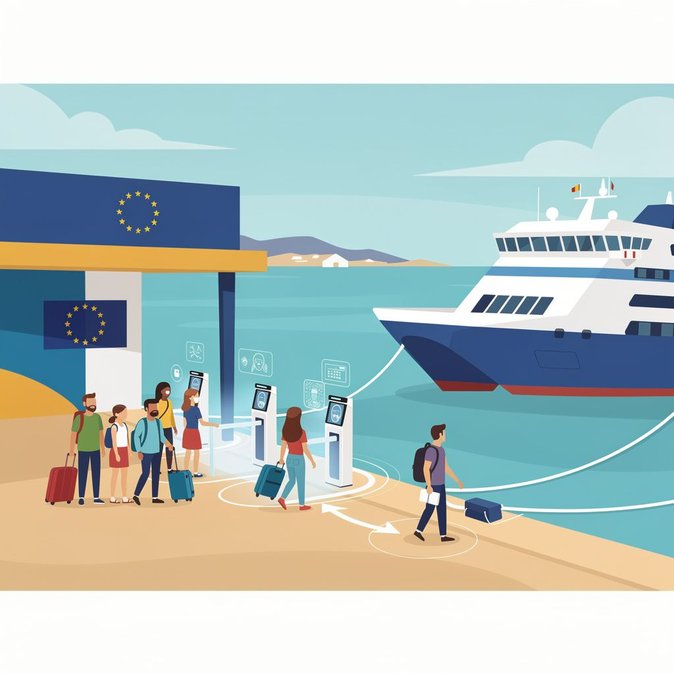
The summer migration of Maghreb residents living in Europe is in full swing, and this year Spain’s busiest seasonal transit, the Operación Paso del Estrecho (OPE), has a new ally: the EU’s Entry/Exit System (EES). During a visit to the Port of Alicante on 13 July, the provincial sub-delegate of the Government, Manuel Pineda, reported that more than 7,500 passengers and 3,000 vehicles have already embarked for Oran and Algiers with ‘total normality and fluency’. A daily ferry rotation coupled with EES biometric kiosks has replaced manual passport stamping, cutting processing times by up to 40 %, according to port police. The automated gates capture fingerprints and facial images, store them for three years and issue digital exit receipts that also serve to verify overstays on future trips. For shipping operators the smoother flow means ships depart at full capacity (1,700 passengers) without the days-long vehicle backlogs that plagued the port a decade ago. Travellers benefit from shaded pre-boarding areas, language mediators and real-time traffic information via a new OPE mobile app launched by Protección Civil. Corporate mobility teams moving staff between Spain and North Africa should note that the same EES technology will be rolled out at Algeciras, Tarifa and Motril later this month; employers may wish to brief travellers on biometric capture and ensure passports are machine-readable.
Source: Cadena SER / EFE