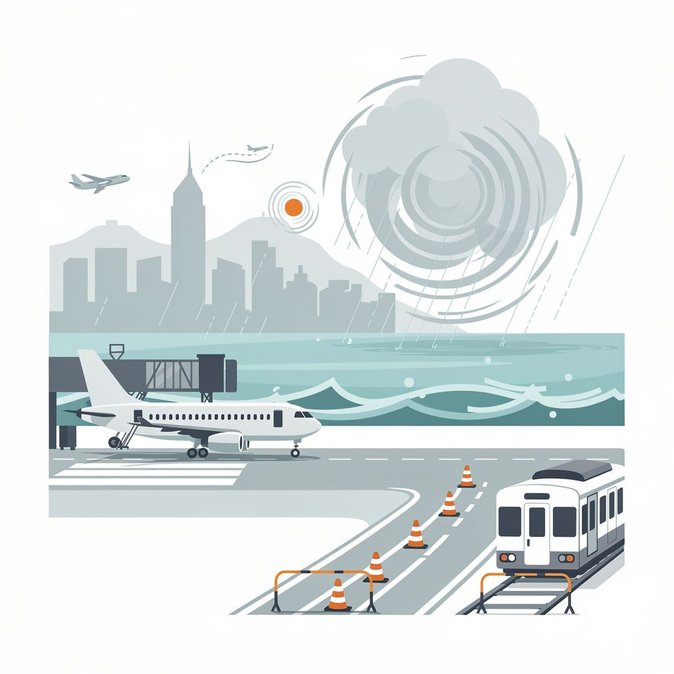
The Hong Kong Observatory (HKO) warned on the afternoon of 13 July that Tropical Storm Bavi — downgraded from super-typhoon status after landfall in Zhejiang — could pass within 100 km of the territory early Tuesday. The agency said it was assessing whether to hoist the Standby Signal No. 1 overnight. Although the storm’s core remains over eastern China, outer rainbands are forecast to trigger squalls and lightning in the Pearl River Delta. Airport Authority Hong Kong has activated its “Typhoon Readiness Level 1”, positioning towing crews and issuing flood-gate instructions to logistics tenants. Low-cost carrier HK Express posted an online travel alert granting free rebooking or refunds for flights to Taipei, Taichung, Kaohsiung and Ningbo between 13 and 15 July, and warned passengers to arrive three hours before departure. Cathay Pacific said it expects “isolated delays” but no wholesale cancellations at this stage. Land transport operators are bracing for service curtailments. The Transport Department has pre-authorised temporary lane closures on the Tsing Ma Bridge should cross-wind speeds exceed 40 km/h, while the Highways Department has inspected debris-prone slopes along Route 3. Cross-boundary coach companies have been told to switch to articulated buses with lower profiles if Signal No. 3 is hoisted. For businesses, the main operational risk is last-minute staff or executive travel disruptions. Mobility managers should monitor airline waivers and remind travellers that many travel insurance policies exclude typhoon-related delays unless cover is purchased before signal issuance. Companies with time-sensitive cargo should consider diverting via Shenzhen Bao’an Airport or utilising the Zhuhai Port of the Hong Kong-Zhuhai-Macao Bridge, which often reopens sooner than Hong Kong’s marine terminals after storms. The HKO will issue its next weather bulletin at 22:00 local time. If Bavi strengthens unexpectedly or tracks further south, higher warning signals could follow, triggering automatic suspension of most ferry, tram and outdoor construction services. Travellers are advised to register for the Immigration Department’s outbound SMS alert programme to receive real-time updates.