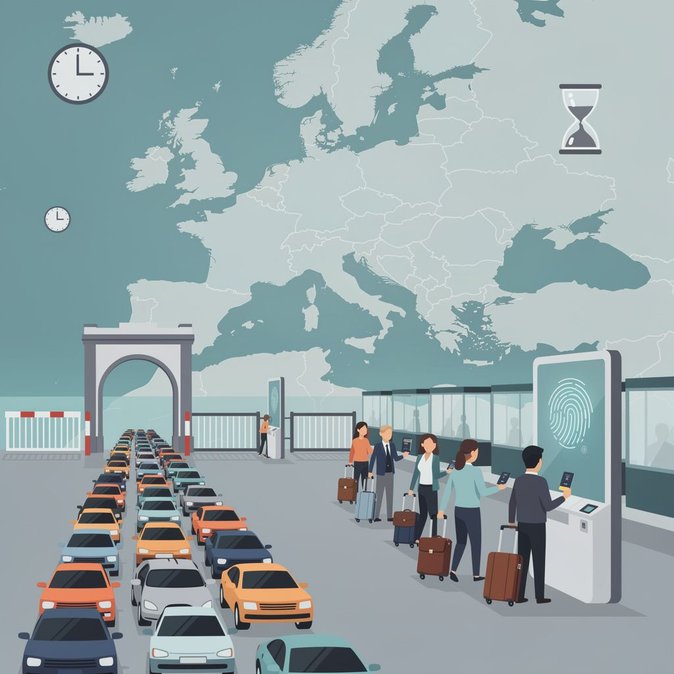
ITV News reports that the European Union’s recently launched Entry/Exit System (EES) is already generating “Brexit-like delays” at Dover and other Channel crossings, with more than 14 million holidaymakers expected to hit the roads this coming weekend. Under EES, nationals of third-country states—including the United States—must provide fingerprints and a facial image the first time they enter the Schengen Area, a process taking several minutes per passenger. France has hurriedly deployed additional border guards on U.K. soil and plans to install extra passport booths and mobile tablets, but transport analytics firm Inrix predicts congestion hotspots on the M1, M25 and M60. For U.S. business travelers routing through London to continental Europe, missed Eurostar trains or ferry slots could disrupt tight meeting schedules and rack up accommodation costs. Travel insurers are already flagging that EES delays may not be covered as “extraordinary circumstances.” Although the system ultimately promises faster, automated crossings once biometrics are enrolled, inconsistent implementation means some ports are collecting the initial scans multiple times, nullifying the time savings. Mobility managers should alert employees to allow at least two extra hours at Dover, Folkestone or St Pancras and carry proof of onward reservations to expedite processing. Companies with expatriate staff in France should monitor whether local prefectures extend the grace period for registering non-EU residents after delayed entry. Looking ahead, the EES experience is a dress rehearsal for the EU’s Electronic Travel Information & Authorisation System (ETIAS), slated for 2027. U.S. nationals will then need advance authorisation akin to ESTA, adding another compliance layer for transatlantic mobility.
Source: ITV News