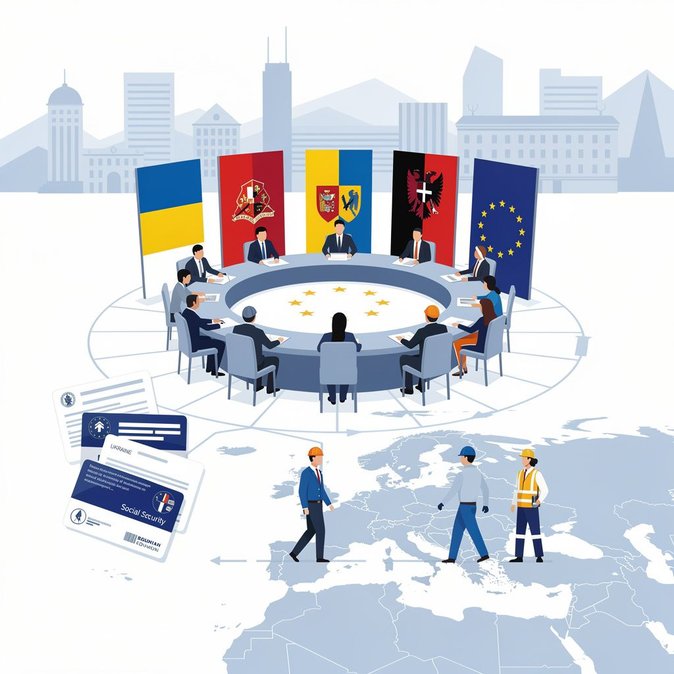
On 14 July, Brussels’ Europa Building became the stage for a marathon series of EU accession conferences with Ukraine, Montenegro, the Republic of Moldova and Albania, held back-to-back alongside the General Affairs Council. Chaired by Ireland’s Minister of State for European Affairs Thomas Byrne, the sessions mark a milestone in each candidate’s path toward membership and, eventually, free movement within the Union. While no immediate visa-free travel rights were granted, negotiators adopted draft chapters on judiciary reforms, labour mobility and digital border management. Belgian officials involved in the talks stressed that early alignment with Schengen-area entry/exit rules will be essential, especially as the EU’s biometric EES becomes fully operational in 2027. For Belgian employers facing chronic skills shortages, the progress rekindles hopes of faster access to Ukrainian IT specialists and Moldovan engineering talent via the EU Blue Card once membership advances. Professional-services firms in Brussels are already assessing language-training budgets and relocation packages to tap talent pools from southeast Europe. Logistics players at the Port of Antwerp and at Liège Cargo Airport also see upside: full EU membership would streamline customs procedures for road freight transiting through Belgium to and from the Black Sea region. However, critics warn that premature labour-market opening without robust social-security agreements could spark wage-pressure debates similar to the ‘Polish plumber’ rows of the mid-2000s. The General Affairs Council pledged to review progress in December 2026. Until then, Belgium’s Immigration Office says current visa rules for nationals of the four candidate countries remain unchanged, emphasising that business-visa applications should be lodged as early as possible given summer backlogs.
Source: Press Club Brussels Europe