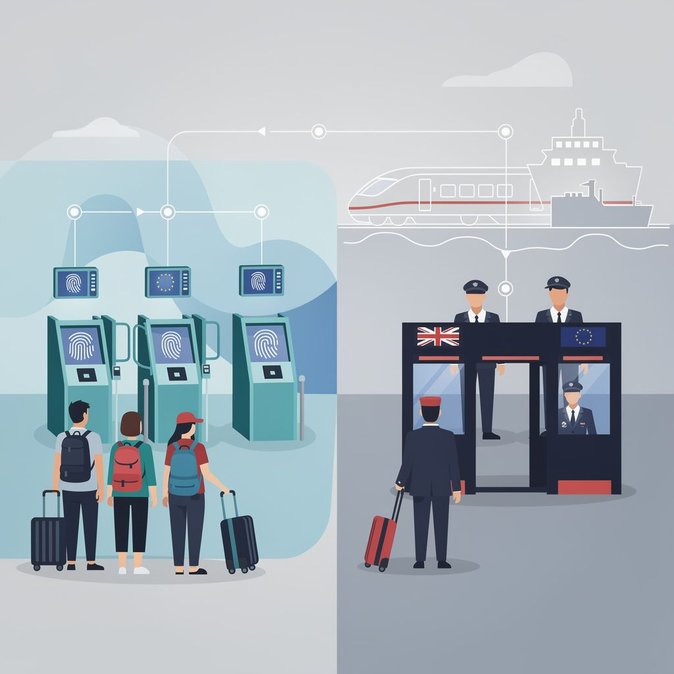
The UK Transport Secretary Heidi Alexander and EU Commissioner for Sustainable Transport Apostolos Tzitzikostas agreed on 14 July to work “shoulder-to-shoulder” to avoid bottlenecks when the EU’s Entry/Exit System (EES) enters its first peak holiday season. The joint pledge follows growing concern from ferry operators, Eurostar and Eurotunnel that biometric registration queues could reach two hours at Dover and St Pancras unless additional capacity is installed in time for the late-July getaway. While the announcement was made in London, the implications are immediate for thousands of Belgian residents who rely on cross-Channel routes for business meetings and trade fairs. Under the EES, all non-EU travellers – including UK nationals entering Belgium – must provide fingerprints and a facial image, while EU residents crossing the external Schengen border in the opposite direction are logged for exit compliance. Because juxtaposed border checks operate in Brussels-Midi and Lille, any processing slowdown in British terminals cascades back into the Belgian timetable, causing missed connections and platform congestion. The UK has now earmarked an extra £20 million for additional booths and e-gates in Kent on top of earlier investments at Eurostar. Even so, Belgian travel-management companies warn clients to build in longer dwell times. “Our advice is to arrive at Brussels-Midi at least 90 minutes before departure until the new lanes prove their throughput,” says Nathalie Van Eyck of HRG Belgium. Belgian customs officials are also preparing contingency staffing at the French frontier in Calais, mindful of the Easter 2026 breakdown that saw coaches bound for Brussels delayed for 12 hours. Meanwhile, the European Commission is testing a mobile-app pre-enrolment option that could go live by October, allowing travellers to upload biometric data before arrival – a development Belgian aviation and rail associations are lobbying to fast-track. Longer term, the episode underscores the interconnected nature of UK-Benelux mobility in the post-Brexit era. Legal experts point out that any operational fixes will need to dovetail with the EU’s separate ETIAS travel-authorisation system, scheduled for full enforcement in early 2027.
Source: UK Department for Transport