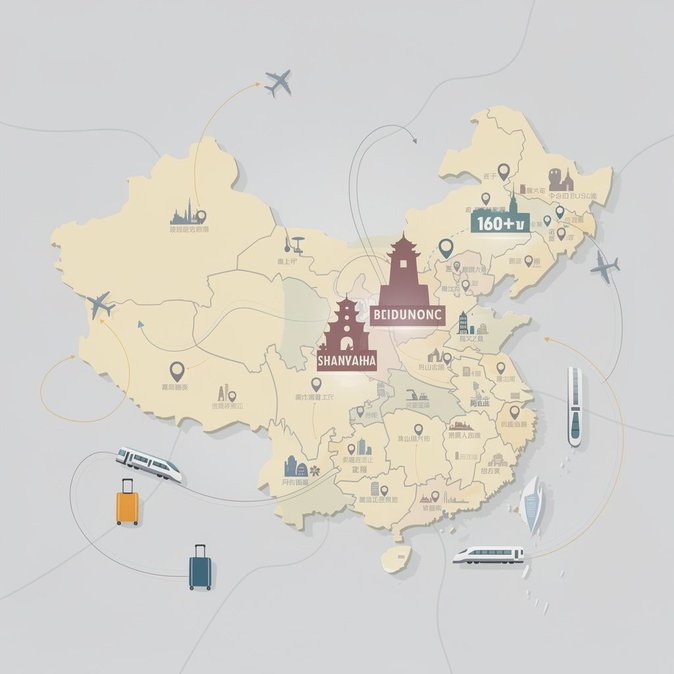
Online travel agency Qunar told Xinhua on 13 July that foreign passport holders booked flights to 160 Chinese cities in H1 2026, up sharply from 110 a year earlier, thanks to Beijing’s expanding visa-waiver list and simplified transit rules. The data show second-tier and border destinations gaining the most: Heihe on the Russian frontier recorded a 280 percent jump in inbound bookings, while Urumqi and Kashgar in Xinjiang nearly doubled year-on-year. Coastal leisure spots such as Sanya and Weihai also benefited as airlines restored pre-pandemic schedules. Qunar said searches for “long weekend” trips spiked among Europeans taking advantage of 72- and 144-hour visa-free transit schemes through hubs like Shanghai Pudong and Guangzhou Baiyun. Corporate itineraries likewise diversified, with semiconductor suppliers favouring Xianyang (for the Xixian New Area) and battery-makers heading to Hefei. The trend illustrates how relaxed entry rules are distributing tourism revenue and foreign investment more evenly across China. Regional governments have responded by opening dedicated English-language lanes at airports, introducing digital tax-refund kiosks and launching subsidy packages for MICE events. Mobility managers should anticipate itinerary requests that combine multiple inland cities and ensure travellers understand domestic e-ticketing, high-speed-rail booking and on-arrival hotel registration requirements, which can differ outside major metros.
Source: Xinhua via eHangzhou