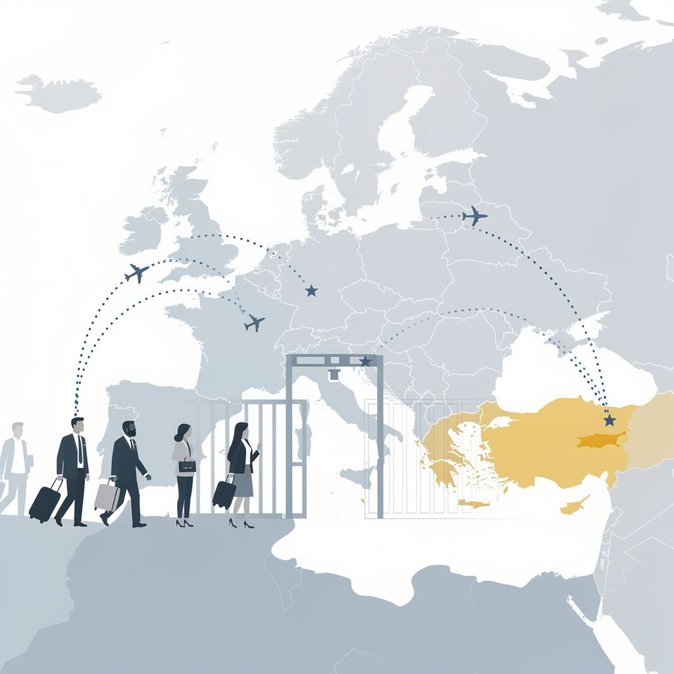
The European Commission confirmed on 15 July that its 2025-2026 Schengen Country Report on Cyprus has been adopted and transmitted to both the Council and the European Parliament. Spokesperson Markus Lammert told the Cyprus News Agency that the document – based on on-site evaluations carried out in December 2025 – found the island “technically ready” in areas such as external-border control, visa issuance, return procedures and database interoperability. While technically encouraging, the report is not the final green light for Cyprus to lift passport checks at EU internal borders. Under Schengen rules, unanimity in the Council is required and member states will debate the findings in September. Over the summer, Cypriot authorities must therefore address remaining observations on staffing levels at crossing points, data-protection safeguards and contingency plans at the two British Sovereign Base Areas, which sit outside EU customs territory yet handle significant passenger flows. For businesses, a favourable Council decision later this year would be a game-changer. Short-haul itineraries from Larnaca or Paphos to other Schengen airports would move to the “domestic” area, eliminating exit-checks and cutting minimum connection times. Schengen membership also unlocks the EU’s new Entry-Exit System and ETIAS pre-travel authorisation on day one, standardising procedures for visa-exempt travellers who visit Cyprus for meetings or project work. Mobility and travel managers should, however, prepare staff for a transition phase. Airlines will need to re-code flights, IT systems must recognise Cypriot ID cards as Schengen travel documents, and UK nationals living in the island’s large expatriate community will face the same ETIAS obligations as elsewhere in the zone. Early communication and updated travel policies will smooth the switch. Politically, a timely Council nod would crown Cyprus’ six-month stint at the helm of the EU Council and bolster the government’s narrative that the country is fully embedded in the EU’s freedom-of-movement architecture. Failure to convince sceptical capitals – notably those concerned about irregular migration routes via the Green Line – could delay accession well into 2027.
Source: CBN Cyprus Business News