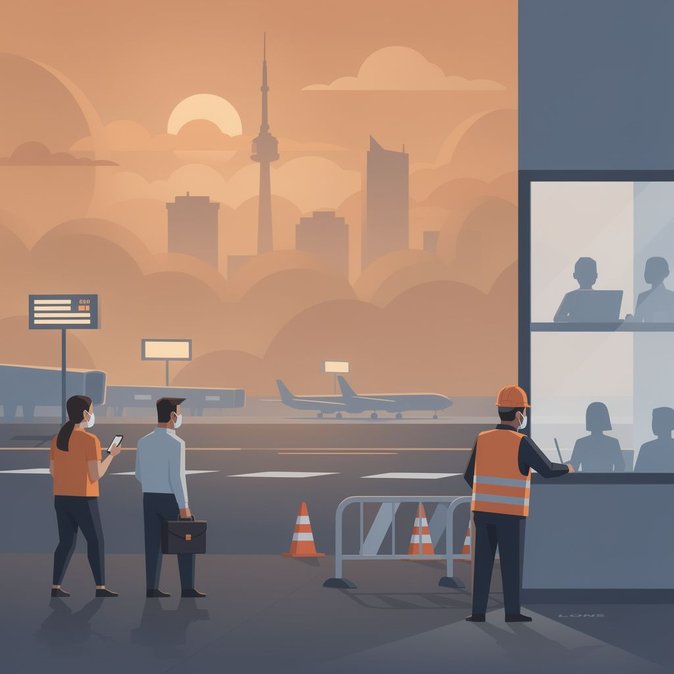
Environment Canada re-issued an orange-level air-quality alert for Toronto and large parts of southern Ontario on the morning of July 17 as dense smoke from more than 190 active wildfires in the province’s northwest drifted south. The federal agency warned that “very poor” conditions are expected to return this evening and could persist into the weekend, advising residents and visitors to limit strenuous outdoor activity and seek medical help for breathing difficulties. The smoke has already forced the cancellation of outdoor events including a FIFA Fan Festival watch party in Toronto and several corporate summer gatherings. IQAir temporarily ranked Toronto as having the worst urban air quality in the world on July 15, underscoring the severity of the episode. Premier Doug Ford told reporters that the province is “throwing every resource” at firefighting efforts, while the Canadian Armed Forces remain on standby to assist evacuations of remote First Nation communities. For business travellers, the advisory translates into potential flight delays, reduced visibility on highways and a growing list of event cancellations. Travellers transiting through Toronto Pearson, Billy Bishop and regional airports should monitor airline notifications; carriers can invoke weather waivers that allow free itinerary changes. Companies with mobile or field employees in the Greater Toronto Area should review occupational-health policies: under Ontario’s recently amended Occupational Health and Safety Act, employers must assess and mitigate wildfire smoke exposure for outdoor workers. International assignees should be reminded that medical-grade or N95 masks offer better filtration of particulate matter (PM2.5) than cloth face coverings. HR teams may wish to distribute local health-authority guidance, particularly to staff with respiratory conditions or young dependants. If air quality continues to deteriorate, remote-work arrangements may be the most practical contingency. Climate scientists note that Canada’s 2026 fire season is running ahead of the record-breaking 2023 season in terms of hectares burned. With peak fire activity historically spanning July and August, mobility managers should anticipate further disruptions—not only to travel but also to health-insurance claims and project start dates in affected regions.
Source: Global News