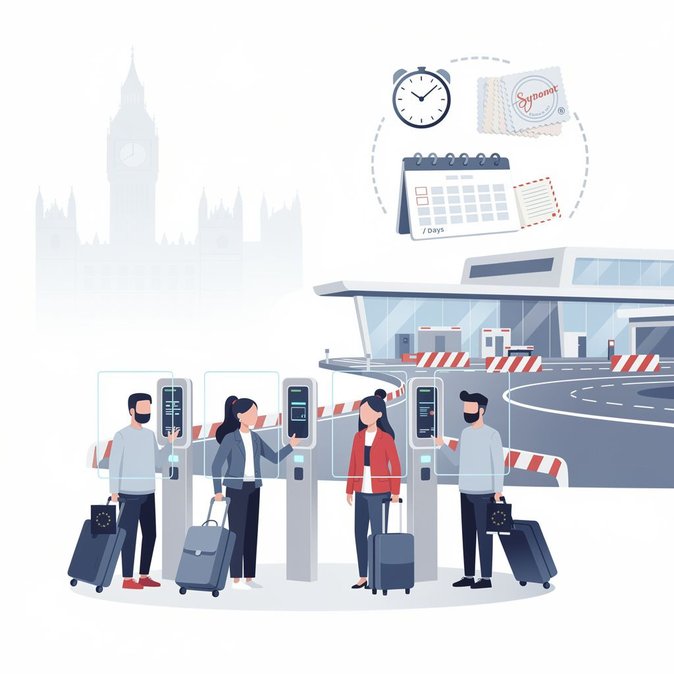
A research briefing issued by the UK House of Commons Library on 17 July dissected the rollout of the EU’s new Entry/Exit System (EES) and companion ETIAS travel authorisation. Although the paper is aimed at British MPs, Czech border authorities immediately circulated an internal note confirming that all Prague Airport e-gates and land-border kiosks have completed software upgrades and biometric tests. EES, fully operational since 10 April 2026, replaces passport stamping with automated biometric capture for non-EU visitors. Czechia has phased the system in over the past three months, but the heightened summer-holiday flow from visa-waiver markets such as the UK, USA and Canada will be the first major stress-test. Prague Airport expects up to 18,000 third-country arrivals per day in late July. The Commons briefing warns of potential vehicle queues at juxtaposed UK–French controls; Czech officials say they are monitoring developments because many British tourists reach Prague via Paris and Amsterdam hubs. Carriers flying direct to Prague have been asked to remind passengers to preload passport data into the EU “Travel to Europe” mobile app to shorten first-time enrolment at Czech e-gates. For corporate mobility teams, the key takeaway is that employees without EU residence cards will now have every entry and exit recorded automatically. Overstays—more than 90 days in any 180-day period—will be flagged instantly, making meticulous trip-counting essential for frequent travellers rotated into Czech projects. The Interior Ministry says staff have been seconded from non-Schengen desks to assist passengers during peak periods this weekend and that contingency booths can be opened within 15 minutes if e-gate throughput drops below 45 seconds per traveller. Airlines report that the proportion of first-time biometric enrolees at Prague has already fallen from 62 % in April to 23 % in July, suggesting the learning curve is levelling off.
Source: House of Commons Library