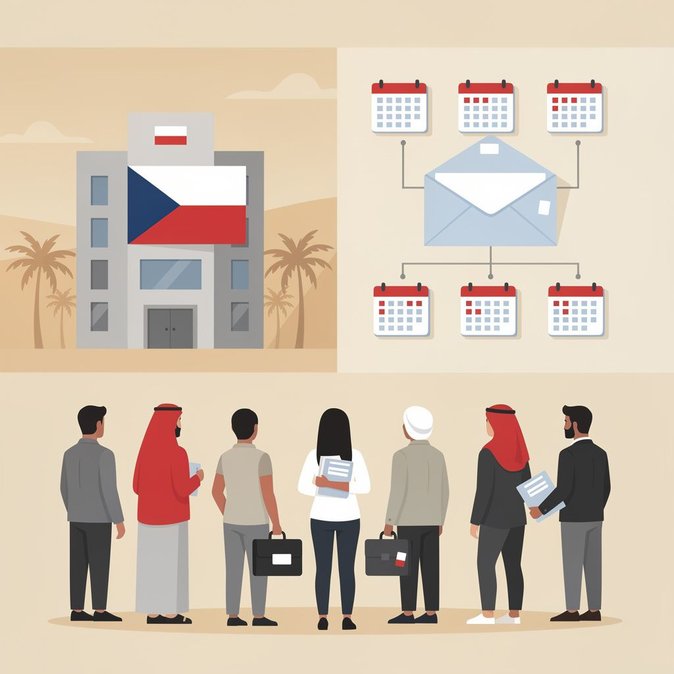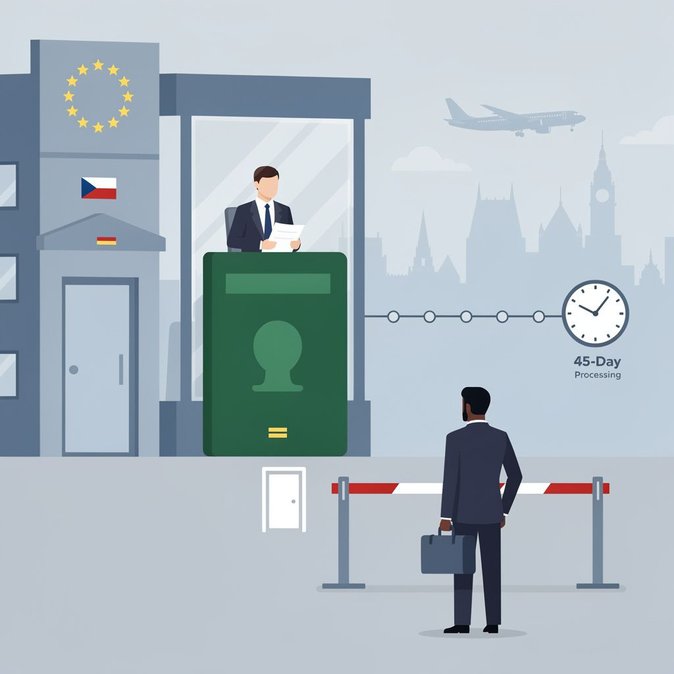
The Czech Ministry of Foreign Affairs (MFA) has activated a package of temporary restrictions on the issuance of Schengen visas to nationals of the Republic of Guinea. Announced on 16 July 2026, the measure follows the European Commission’s annual assessment of third-country cooperation on readmission of irregular migrants. Under Article 25a of the EU Visa Code, Member States may temporarily tighten visa requirements for countries that are judged unco-operative in taking back their own nationals who are subject to return orders. The Council adopted an implementing decision last week; Prague has now translated the decision into national practice. Effective retroactively from 10 July 2026, every Guinean applicant—regardless of place of residence—must submit a full set of supporting documents, pay the standard visa fee (no exemption for holders of diplomatic or service passports) and wait up to 45 days for a decision instead of the usual 15. Only single-entry visas may be issued. Family members of EU/UK citizens and cases covered by international conventions remain exempt. The tougher rules will be reviewed after six months; they can be lifted, extended or further tightened depending on Guinea’s co-operation record. For Czech businesses, the immediate impact is modest because trade and mobility links with Guinea are limited. Nevertheless, companies that hire Guinean contractors for short-term projects or conferences in the EU should factor in the longer processing time and higher refusal risk. Event organisers have been advised to begin the visa process at least two months in advance and to issue invitation letters that precisely match the applicant’s supporting evidence. The case is noteworthy because it shows how the EU’s new visa-leverage mechanism is being used in practice, and Czechia is signalling that it will not hesitate to apply Brussels decisions domestically. Mobility managers should monitor whether other, more strategically important labour-supply countries are placed under similar restrictions, as that could disrupt recruitment pipelines and business-travel schedules.