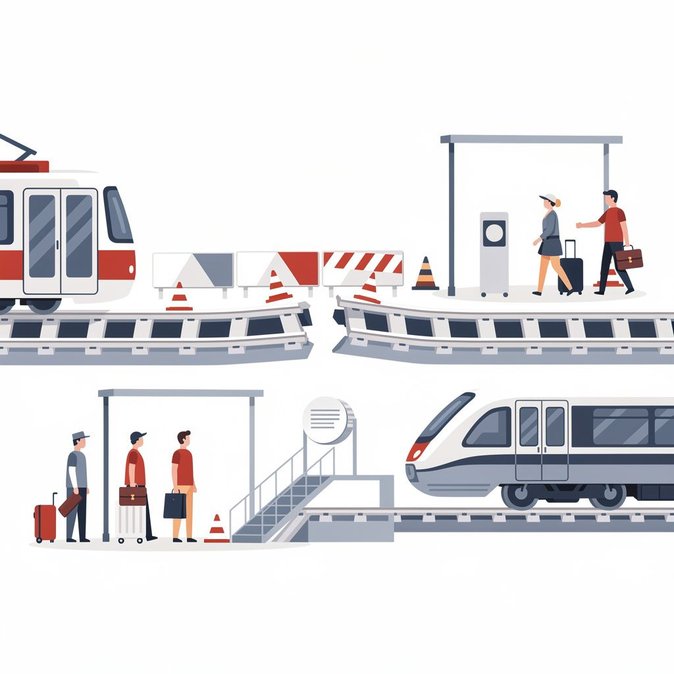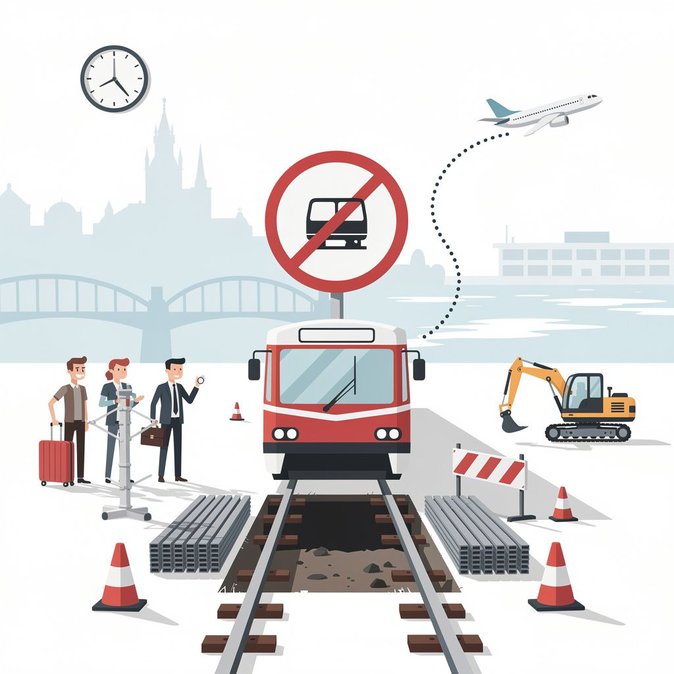
From the very first service on Saturday, 18 July 2026, trams have stopped running on the 1.6-kilometre stretch between Újezd and Lazarská in the centre of Prague. The Prague Public Transit Company (DPP) has launched an intensive reconstruction of rails, points and overhead wiring on one of the capital’s busiest surface corridors, used by up to 16 tram services an hour during the morning peak. The shutdown will last until the end of operations on Monday, 10 August 2026. In that time engineers will replace worn rails laid a decade ago, renew drainage under the tracks to reduce noise and vibration, and install new smart point motors that can be monitored remotely from the city’s traffic control centre. The works have been scheduled for the summer holiday period when commuter volumes are lower, but DPP still expects the closure to affect tens of thousands of daily passengers as well as tourists who rely on the scenic route past the National Theatre and Charles Bridge. No replacement bus service is being provided; instead, the operator is diverting lines 12, 22, 23, 41 and 42 and recommending that travellers transfer to Metro line B at Národní třída or line A at Malostranská. Business visitors heading from hotel clusters in Malá Strana toward the New Town should factor in at least 15–20 minutes of extra travel time, especially at peak sightseeing hours. For companies organising conferences in the nearby Quadrio or Novoměstská radnice venues, DPP suggests issuing delegates with updated way-finding maps in advance and encouraging the use of the metro. The closure also affects last-mile connections to Václav Havel Airport: the Airport Express and AE100 bus lines terminate at Náměstí Republiky and Hlavní nádraží respectively, both of which link to the affected tram corridor. Travellers catching early flights are advised to allow additional transfer time or book door-to-door services during the construction window. Once completed, the upgraded track will raise maximum speeds from 40 km/h to 50 km/h and cut journey times by up to two minutes, according to DPP’s project manager Jan Kurowský. The agency says the overhaul is part of a 3-billion-koruna, five-year plan to modernise Prague’s street-level network ahead of the 2028 launch of the new D-metro line. For global mobility managers moving staff through Prague, the message is clear: short-term inconvenience now for smoother—and quieter—rides in the years ahead.