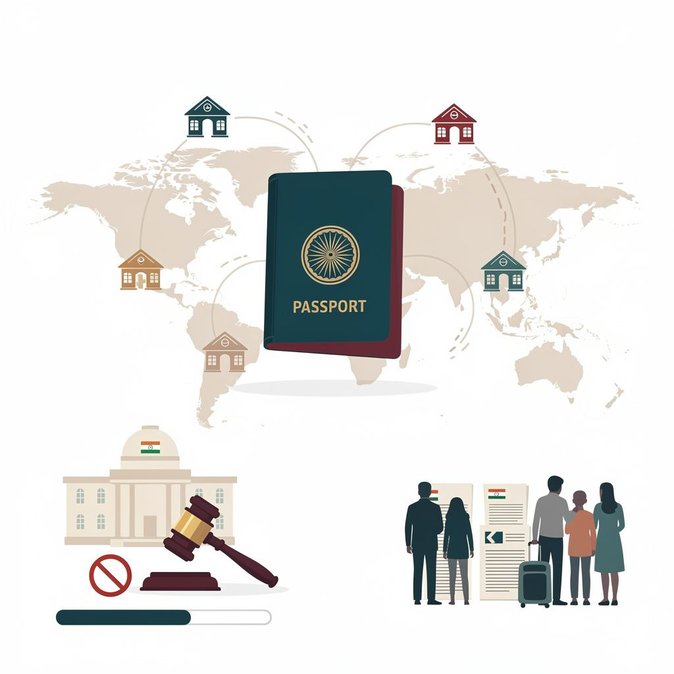
In a judgment with immediate operational fallout, the Delhi High Court on 17 July 2026 annulled the Ministry of External Affairs’ global tender for outsourcing passport, visa and consular (CPV) services in four key missions—Canberra, Singapore, Abu Dhabi and Kuwait City. The court held that the evaluation committee used “undisclosed comparative standards” and made “arbitrary deductions,” violating transparency norms under India’s procurement law. The ruling has already paralysed services in Australia: VFS Global suspended new Indian passport and visa applications from 1 July after receiving instructions from the High Commission in Canberra. Similar slow-downs are appearing in Singapore and the Gulf, leaving thousands of Indians abroad unable to renew passports, attest documents or obtain Overseas Citizen of India (OCI) cards. Stakeholders are alarmed. Indian tech workers in Sydney report losing job offers because police-clearance certificates—a prerequisite for permanent residency—cannot be issued in time. Exporters using business visas to travel into India warn of supply-chain delays. Airlines flying the busy India–Australia corridor say refund requests have jumped 18 % week-on-week. The MEA may now have to run CPV operations in-house or issue short-term contracts while floating a fresh Request for Proposals within four weeks, as ordered by the court. Experts caution that bridging arrangements must include robust data-security clauses; the tender covers biometric capture and storage for millions of applicants. Corporate mobility managers should advise employees to check mission websites daily, budget extra travel days to visit India for urgent services, and retain digital copies of expiring documents. VFS Global has said existing applications will continue to be processed, but no new slots will open until further notice.
Source: Business Standard