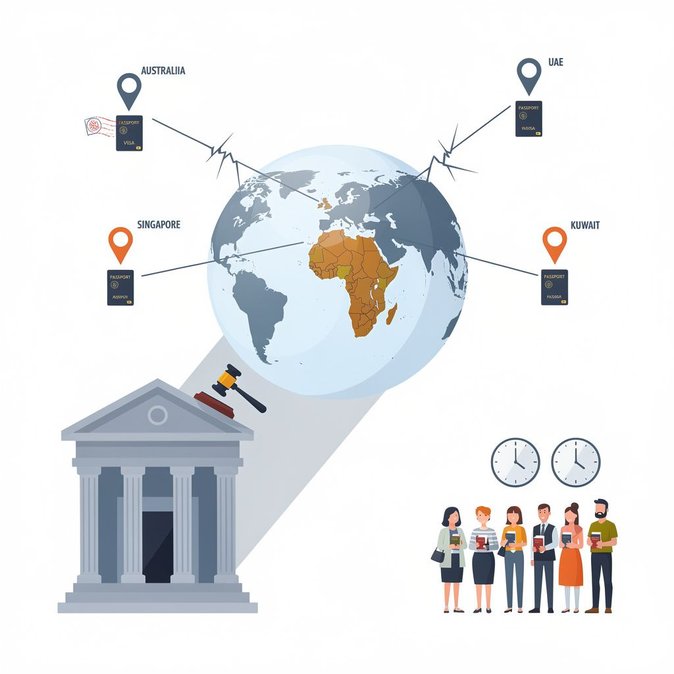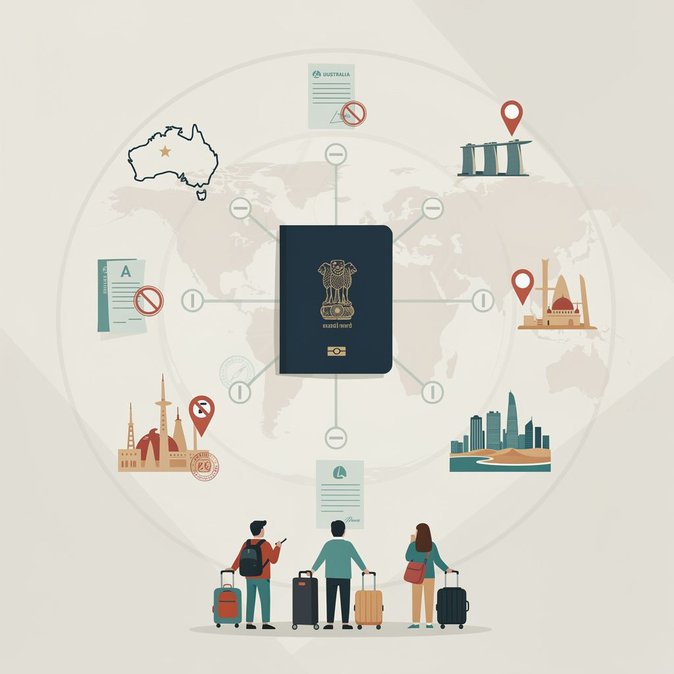
In a judgment released on 17 July 2026, the Delhi High Court set aside the Ministry of External Affairs’ ₹1,200-crore tender for outsourcing passport, visa and consular services in Australia, Singapore, the UAE and Kuwait. Two losing bidders – E Trav Tech and Verasys – convinced the bench that the evaluation process lacked transparency and failed to record reasons for technical disqualifications. The decision has immediate operational consequences. VFS Global, the incumbent service provider in Australia, had already suspended new Indian passport and visa submissions on 1 July after the High Commission in Canberra warned of a “tender dispute”. Friday’s ruling prolongs that suspension until fresh bids are awarded, likely several months away. Similar pauses are expected at the Indian High Commission in Singapore where volumes routinely exceed 1,000 applications a day. For Indian nationals overseas the disruption is real: students awaiting passport renewals for university enrolment and skilled migrants needing police-clearance certificates face ticking deadlines. One Sydney applicant told Business Standard he had flown to India to submit biometrics rather than risk a 60-day invitation expiry for Australian permanent residence. Corporate mobility managers should consider contingency routing – for example, filing at FRROs during home-leave trips – and budget for emergency travel. Strategically, the verdict is a reminder that mission-critical mobility services rely on procurement governance. The court’s insistence on documented evaluation criteria will influence future MEA tenders covering North America and Europe scheduled for Q4 FY 2026-27. Vendors will need to beef up transparency, while HR teams should monitor embassy websites for ad-hoc processing changes.
Source: Business Standard