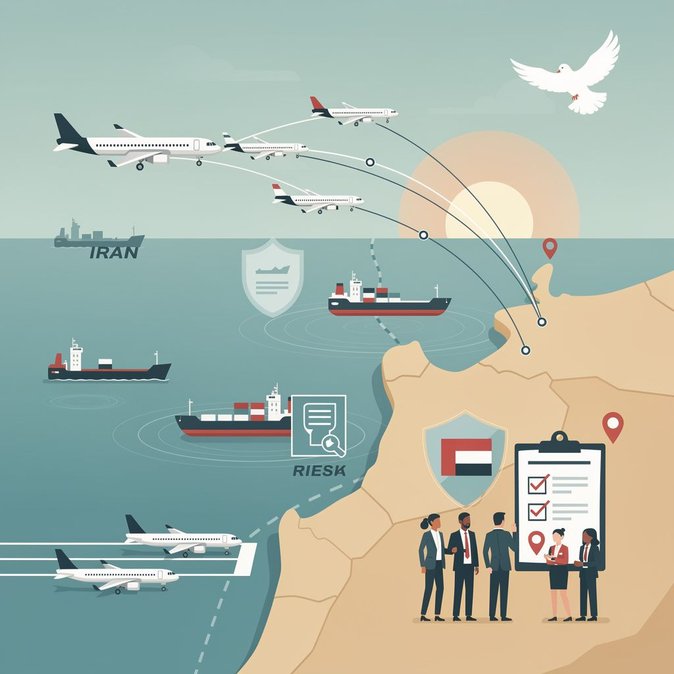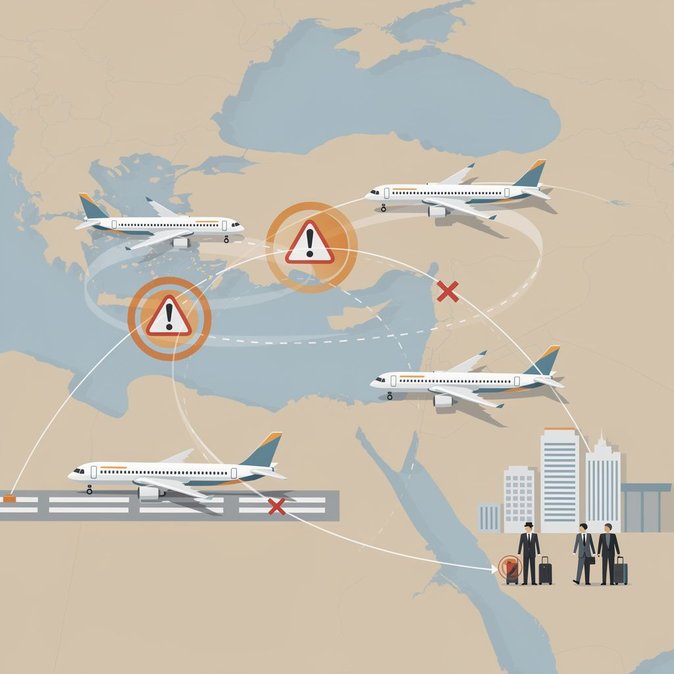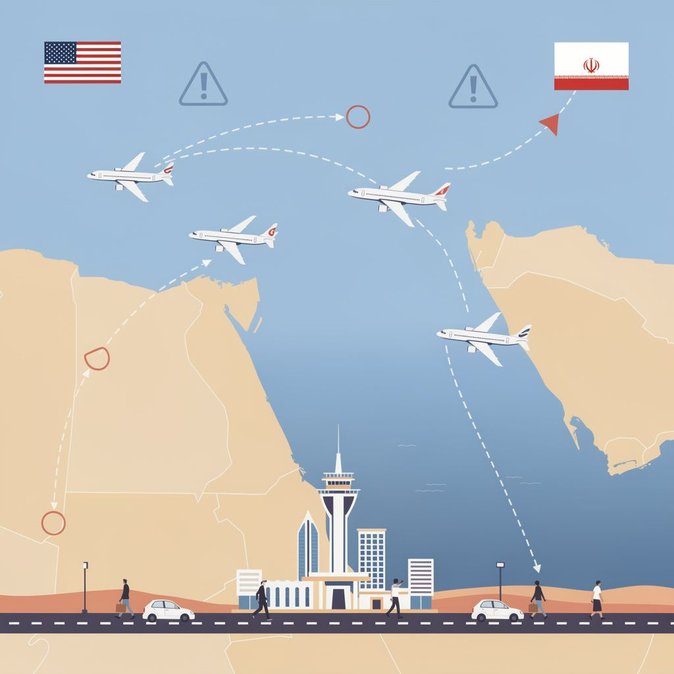
Regional air travel faced renewed disruption on 18 July as the United States launched a seventh consecutive night of strikes against Iranian targets and Tehran retaliated across the Gulf. Gulf News reports that Emirates, Etihad and Air Arabia have cancelled or retimed multiple services to Kuwait, Saudi Arabia and Bahrain. Several European and Asian carriers continue to suspend over-flights of the Strait of Hormuz, forcing longer routings and potential delays for connections via Dubai and Abu Dhabi. UAE authorities have simultaneously opened an investigation into a false media report claiming explosions in Downtown Dubai—a reminder that disinformation can quickly trigger public anxiety and logistical knock-on effects. The Public Prosecution says legal action will be taken against outlets that publish unverified security claims. For corporate travel managers the key is agility. Companies are rebooking staff via Muscat or Doha, building 24-hour flex windows into itineraries and ensuring travellers receive real-time alerts through duty-of-care platforms. Insurance providers have updated risk ratings for Kuwait and parts of eastern Saudi Arabia; travellers without pre-trip authorisation may find policies void. Air-cargo operators are also feeling the strain. Forwarders estimate that diversions around restricted air-space add up to 45 minutes on key Europe–Asia lanes, squeezing already tight freighter schedules at Dubai World Central. Rate surcharges of US$0.15–0.25/kg are being passed on to shippers in electronics, pharma and perishables. While daily life inside the UAE remains normal, experts advise residents to check flight status before heading to the airport, allow extra transit time and rely only on official channels such as airlines, NCEMA and the Ministry of Foreign Affairs. Mobility teams should review evacuation plans for assignees in neighbouring Gulf countries and confirm that passports and Emirates IDs are valid for at least six months should rapid exit be required.
Source: Gulf News