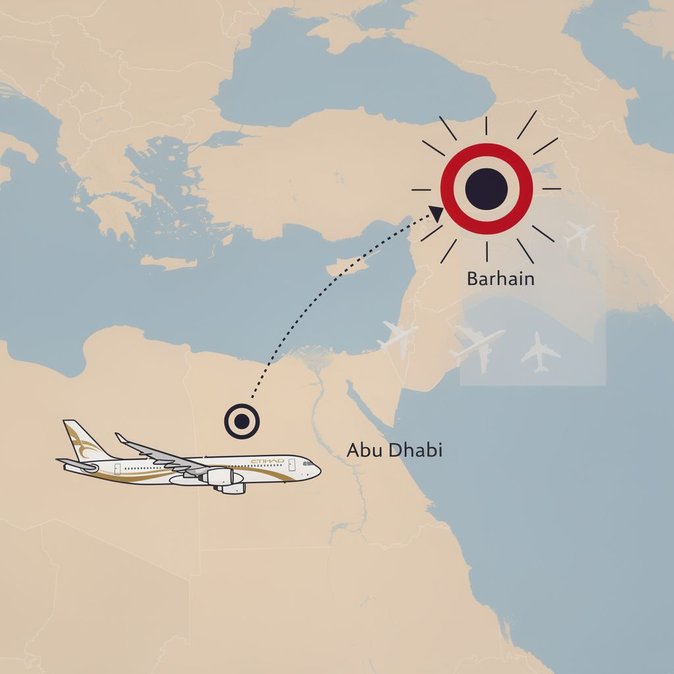
Etihad Airways was forced to suspend part of its Abu Dhabi–Bahrain schedule on 16-17 July after Bahrain International Airport shut down overnight amid a sudden flare-up in the US–Iran conflict. Flight EY647, which had already departed Abu Dhabi’s Zayed International Airport, turned back less than an hour into the journey when Bahraini air-traffic control issued an immediate closure NOTAM. The return of the Airbus A320 triggered the cancellation of the corresponding EY647/648 round-trip pair for the day, although Etihad said its remaining three daily rotations would operate subject to dynamic risk assessments. In a statement to passengers, Etihad emphasised that “safety is our first priority” and asked travellers to keep their contact details up to date so that SMS and e-mail re-accommodation notices could be delivered in real time. The airline is waiving change fees and offering full refunds for affected tickets. Etihad’s customer-service teams have been instructed to provide hotel accommodation, meals and ground transport for anyone facing an enforced overnight stay, in line with UAE General Civil Aviation Authority rules. From a network-planning perspective, the diversion highlights how quickly regional geopolitics can cascade into operational disruption for Gulf carriers. Abu Dhabi–Bahrain is a strategic shuttle for corporate travellers linking two financial centres and for oil-and-gas commuters shuttling between headquarters and offshore projects. Even a partial suspension pushes high-yield passengers onto circuitous routings via Doha or Kuwait, raising journey times and clouding on-time-performance metrics that Etihad has worked hard to rebuild since the pandemic. Insurance advisers warn that the temporary airspace closure could trigger clauses in global mobility policies that require companies to approve alternative routings or charter flights for mission-critical staff. Multinational mobility managers with personnel moving between UAE and Saudi-linked projects have been urged to review contingency plans covering both the Bahrain corridor and neighbouring Saudi gateways such as Dammam and Riyadh. If hostilities escalate further, analysts say we could see a repeat of the 2022 pattern in which carriers added fuel-surcharge supplements and cargo forwarders re-routed high-value shipments through Muscat and Salalah to skirt high-risk zones. For now, business travellers should monitor GCAA and airline advisories and allow additional buffer time when connecting through Abu Dhabi or transferring onward to Eastern Province worksites.
Source: Air Journal