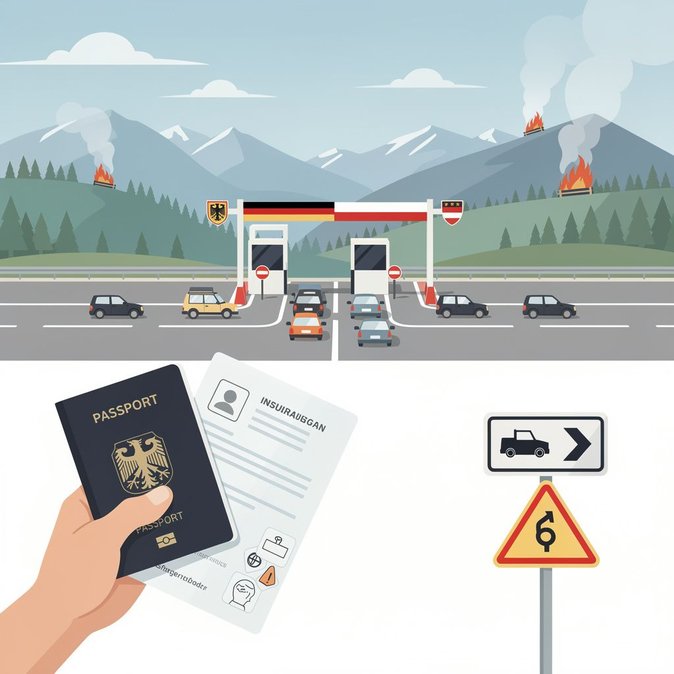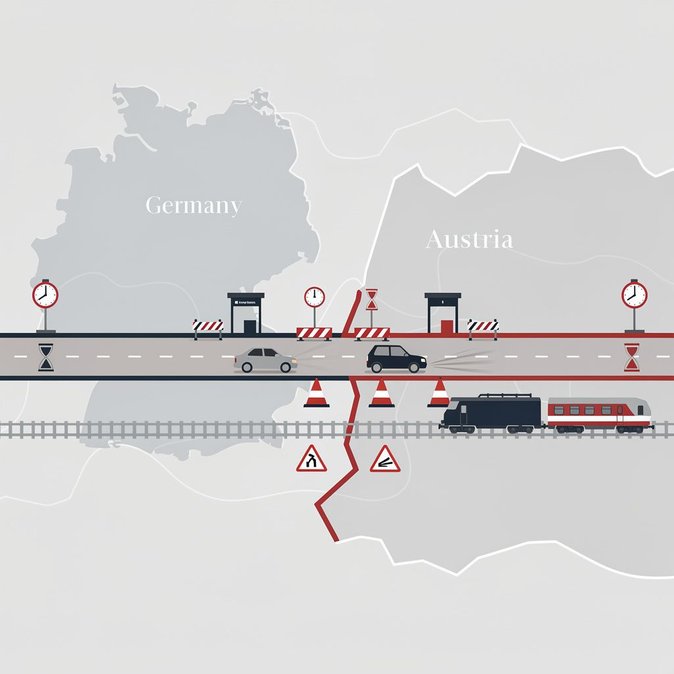
The German Federal Foreign Office (Auswärtiges Amt) refreshed its travel and security notice for Austria on 19 July. While no threat level change was made, the update consolidates guidance on border-control practices and on-going transport works that can affect German businesses operating in or through Austria. Key mobility points include confirmation that Germany continues to carry out temporary Schengen-internal checks at the Bavaria/Tyrol and Salzburg frontiers, while Austria maintains its own controls on the borders with Slovenia, Hungary, Slovakia and Czechia. Travellers are reminded to carry passports or ID cards even on routine business trips and to factor possible queues into schedules. The advisory also highlights infrastructure issues of corporate interest: a one-lane restriction on the Brenner motorway until at least end-2027, the vignette and special-toll regime for Austrian motorways, and the recent electrical fault on the Weststrecke that disrupted rail links (now being resolved). It reiterates that winter tyre rules apply from 1 November and that random police checks on digital vignettes are increasingly automated. For employers, the note serves as a compliance nudge: staff dispatched to Austria should carry A1 certificates proving social-insurance coverage and ensure that any work exceeding 10 days is filed with Austria’s Zentrale Koordinationsstelle (ZKO) under the Anti-Wage-Dumping Act. The advisory also flags Austria’s elevated terrorist threat level (4/5) and recommends registration on the ‘Sicher Reisen’ app. Because the document is widely used by insurance underwriters to assess risk premiums, the unchanged but re-dated notice means no immediate impact on policy conditions, but confirms continued vigilance at the Alpine border.
Source: German Federal Foreign Office