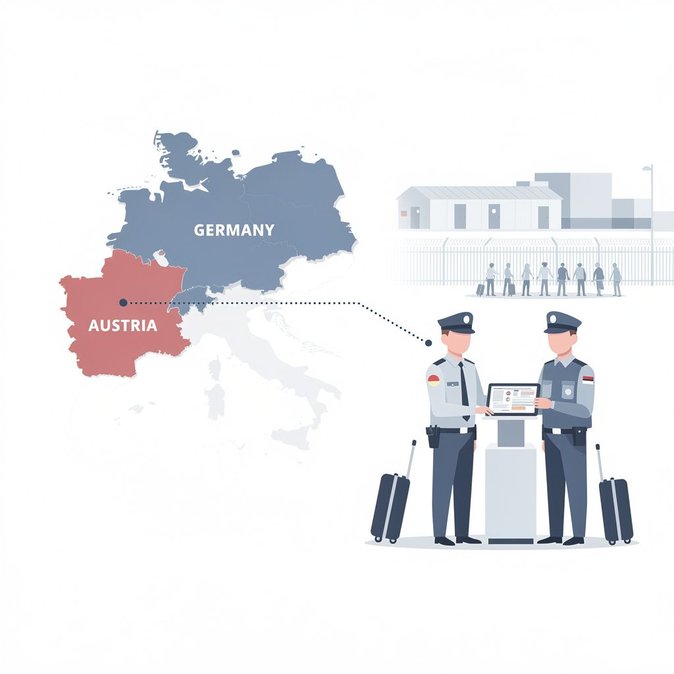
Austria’s Interior Minister Gerhard Karner spent 15–16 July 2026 in Berlin for an intensive working visit with his new German counterpart Alexander Dobrindt. The two conservative ministers are politically aligned on tightening Europe’s irregular-migration regime and used their first bilateral to turn broad ambitions from this spring’s EU Pact on Migration and Asylum into a concrete joint project: establishing "return centres" in safe third countries outside the European Union. According to the Austrian Interior Ministry communiqué released on 16 July, both governments want negotiations with potential host countries wrapped up by year-end so that the first centre can start operating in 2027. The facilities would hold migrants whose asylum claims have been rejected but who cannot be deported directly – for example because their country of origin refuses readmission or because of safety concerns. Vienna already runs a voluntary-return programme for Syrians and says it removed 7 000 people in the first half of 2026; Berlin has resumed deportations to Afghanistan. By pooling resources and presenting a united front, the neighbours hope to overcome EU-level legal and political hurdles that stalled similar ideas in the past. For corporate mobility managers the message is double-edged. On one hand, closer coordination between the two largest German-speaking countries should reduce ad-hoc border checks that have periodically disrupted business travel since 2015; on the other, companies that employ non-EU nationals must prepare for stricter identity screening and faster withdrawals of residence status if work contracts end. The ministries confirmed that labour-market inspections around major logistics hubs will be stepped up over the summer. Austria’s stance on reinstating returns to Syria remains controversial. Human-rights NGOs argue that Damascus is still unsafe, but the government maintains that carefully screened voluntary departures backed by a €3 000 reintegration grant are a humane alternative to long-term limbo. Vienna will brief EU partners on its experience when the Home Affairs Council meets in October. Practically, assignment planners should expect more detailed travel-history questions at Austrian and German airports and should verify that any employees transiting via the two countries carry documentation proving legal stay in the Schengen area or a valid visa. The ministries said they will issue new employer guidance once a host state for the first return centre is identified, likely in North Africa or the Western Balkans.
How VisaHQ can help
VisaHQ simplifies the visa application process for individuals and businesses. Check current travel requirements, prepare the required documents and manage your application online through the VisaHQ Austria portal.More From Austria
View all
Austria consolidates Foreign Employment Act, tightening compliance rules for hiring non-EU nationals

Vienna Airport customs seize undeclared shark-cartilage vials in latest crackdown on wildlife products