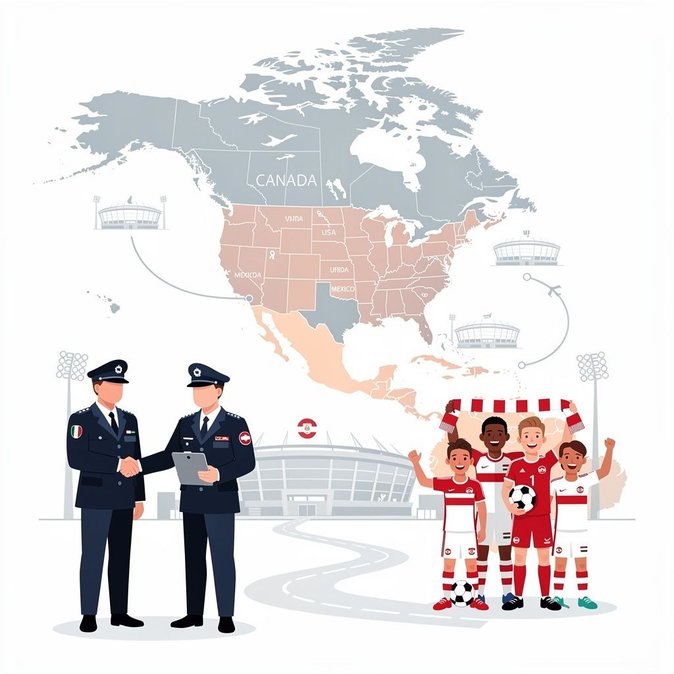
Austria’s Interior Ministry (BMI) on 20 July presented its final report on the inter-ministerial task-force that oversaw security for the Austrian national team and more than 20,000 travelling supporters during the FIFA World Cup 2026 in Canada, Mexico and the United States. According to Interior Minister Gerhard Karner, no major incidents involving Austrian citizens were recorded, and cooperation with North-American security agencies was “exemplary”. The task-force, led by senior police official Günther Marek, deployed liaison officers to the International Police Cooperation Centre (IPCC) in Dallas and embedded uniformed Austrian officers at every match venue where Austria played. A real-time information channel linked the IPCC, the Austrian embassy network, the ÖFB football association and public-viewing organisers back home. The system allowed rapid verification of fan identities, expedited replacement of lost passports and instant sharing of crowd-management intelligence. For multinational companies the smooth operation offers a case study in large-scale duty-of-care logistics. Many firms used the tournament as an incentive trip for clients and staff; knowing that Austrian police and consular teams were on the ground lowered perceived risk and simplified travel-approval workflows. The model could be replicated for other mega-events such as Expo 2027 in Belgrade or the 2030 Winter Games bid in the Alps, BMI officials said. The ministry also highlighted lessons relevant to broader mobility management: advance registration of charter flights carrying supporter groups, pre-clearance of equipment at Canadian and US customs, and dedicated emergency hotlines in German. Travel-risk consultants note that a single, unified security protocol across three host countries reduced confusion and should inform future multi-state events. With the World Cup operation now formally closed, the task-force leader Günther Marek will retire after four decades of service, having shaped Austria’s approach to securing international sporting events from EURO 2008 to the present. His departure leaves an opening for a new generation of officers to integrate digital border-management tools such as the EU Entry/Exit System into event security planning.