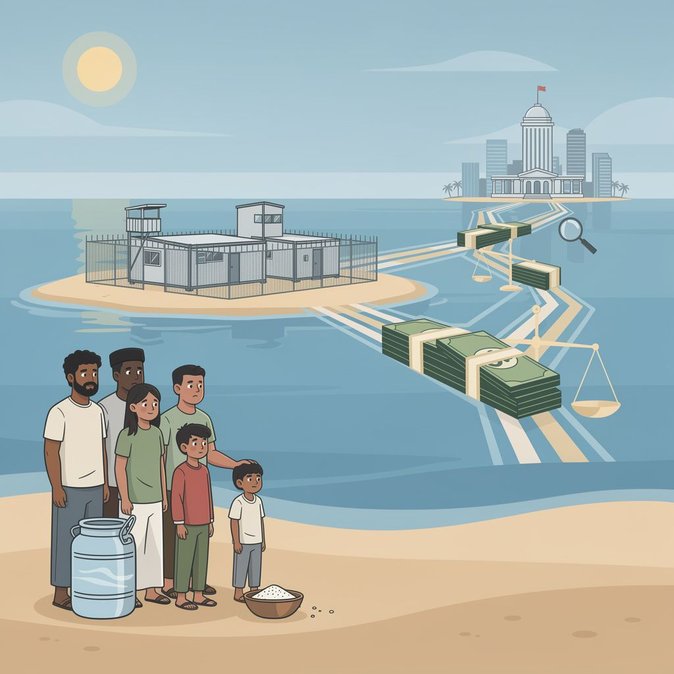
A new survey by the Asylum Seeker Resource Centre (ASRC) has laid bare the paradox at the heart of Australia’s offshore processing regime: despite the federal government outlaying almost one billion dollars last financial year – equivalent to more than AU$9 million for each of the roughly 100 refugees and asylum seekers on Nauru – many say their AU$260 fortnightly allowance is insufficient to buy food and drinking water. Reporting by Guardian Australia on 20 July 2026 details accounts of detainees rationing meals, facing produce prices up to three times higher than in Australia and struggling with unclean rainwater supplies. The findings follow the Home Affairs portfolio’s Budget statement revealing a five-year, AU$791 million contract with US prisons operator MTC Australia to run the island facility, plus AU$106 million for medical services. Nauru’s detention centre, emptied briefly in 2023, again holds more than 100 people from China, Bangladesh, Pakistan and elsewhere who tried to reach Australia by boat after 2023. Under bipartisan policy they will never be resettled in Australia, even if recognised as refugees; instead they must await a third-country deal. Human-rights groups say the data prove the model is economically irrational as well as harmful. Jana Favero, ASRC deputy chief executive, called the system “completely broken”, adding that even basic nutrition and water standards are not being met. The government argues stipends are pegged to the local cost of living and are reviewed regularly. For multinational employers the controversy renews reputational and compliance risks around subcontracting or investing in suppliers connected to offshore processing. It also foreshadows potential policy shifts as fiscal and humanitarian pressures converge ahead of the 2026-27 Budget cycle.
Source: The Guardian