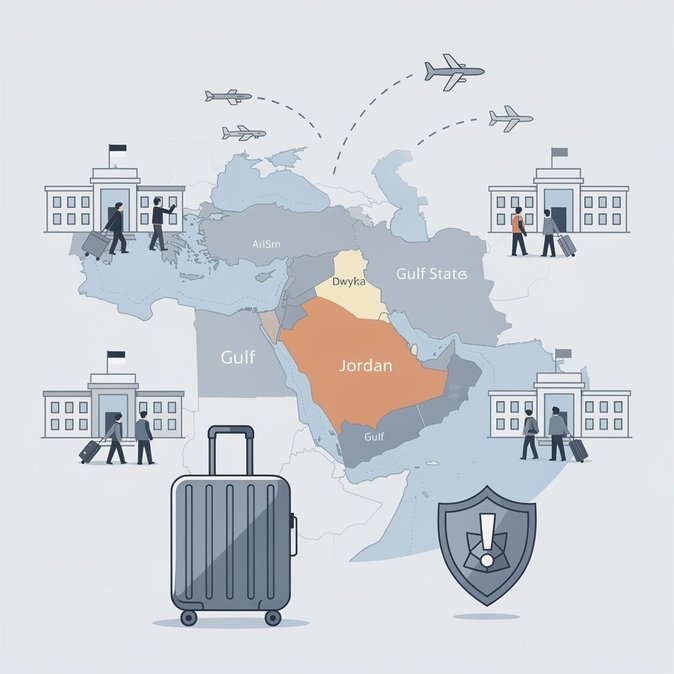
US citizens planning business or leisure trips to the Gulf have been urged to reassess itineraries after the State Department raised travel advisories for the UAE, Saudi Arabia, Kuwait, Bahrain, Qatar, Oman and Jordan on July 20. The move, echoed by Canada and the UK, follows renewed missile and drone activity linked to the Iran-Israel conflict and intelligence suggesting possible strikes on commercial hubs such as Manama and Aqaba. In Kuwait, the US Embassy is providing only limited emergency services after a series of flight cancellations. In Bahrain, Americans were warned to seek cover immediately if sirens sound; US non-emergency staff remain outside the kingdom. Washington’s notice also reiterates that non-emergency visa services across the Gulf are suspended, complicating regional rotations for US expatriates and contractors. For multinationals, the patchwork of advice means reassessing duty‐of-care protocols and evacuation triggers. Companies with staff on rotation between Houston, Doha and Dubai have begun activating alternate routings via Europe and diverting engineering teams to Oman’s Duqm free-zone, which remains open but subject to US government movement restrictions. Travel-risk managers are recommending that employees carry at least two exit options and pre-book flexible tickets given rolling airline schedule cuts. Air-cargo flows are also vulnerable. Forwarders at JFK report delays on pharma consignments transiting through Kuwait and Riyadh as carriers adjust freighter routings to avoid conflict zones. Insurers have upgraded war-risk premia for flights entering Saudi and Bahraini airspace, adding to logistics costs. If tit-for-tat strikes continue, analysts warn of potential temporary closures at Dubai World Central or Jebel Ali Port, both critical for US defense and energy supply chains. While the advisories stop short of mandating evacuation, the heightened language—"reconsider travel" for several Gulf states—will likely trigger internal policy thresholds at Fortune 500 firms. Travel leaders should review exception-approval workflows, ensure 24/7 tracking of assignees in affected cities, and confirm that local partners can provide secure ground transport if commercial flights are disrupted.
Source: Gulf News