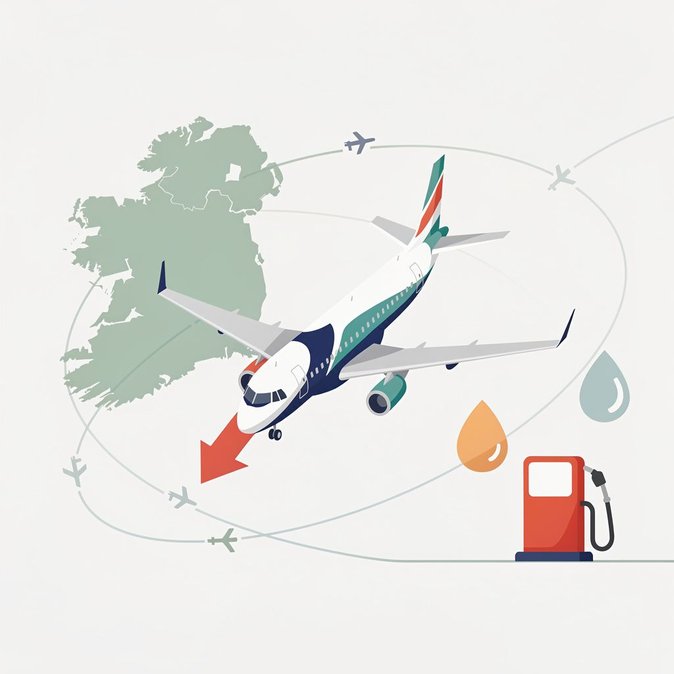
Ryanair’s first-quarter earnings offer the clearest real-time barometer of how Europe’s aviation sector—so central to Ireland’s open economy—has coped with the oil-price spike triggered by the Middle-East conflict. In results released in Dublin this morning, the carrier reported profit after tax of €538 million, down from €820 million a year earlier and about €90 million below analyst consensus. Management blamed a 20 % un-hedged fuel exposure, weaker consumer sentiment and an “exceptionally late” booking curve that obliged the airline to discount peak-summer tickets. While the headline numbers still point to a profitable summer, Ryanair warned that it has “no visibility” on the winter season and declined to issue full-year guidance. The airline expects to keep fares “modestly down” year-on-year in the July–September quarter to stimulate demand, even as operating costs rise because of higher jet-fuel prices and constrained aircraft supply. CFO Neil Sorahan noted that short-haul capacity across Europe will remain tight until “at least 2030,” prolonging airport-slot scarcity in hubs such as Dublin. For Irish corporates the numbers matter on two fronts. First, Ryanair accounts for roughly 40 % of all seats in and out of the Republic; sustained fare volatility complicates travel budgeting for multinationals that use Dublin as an EMEA base. Second, the carrier’s cash-flow strategy will influence the pace at which it restores frequencies to secondary regional airports that depend on air connectivity for investment and talent flows. Ryanair says it will prioritise cash for Boeing 737 MAX-10 deliveries, shareholder dividends and the completion of its €700 million share-buy-back, with a target of rebuilding gross cash to €4 billion. That capital-allocation stance suggests route expansion will be selective until fuel markets stabilise. Travel managers should therefore lock in autumn seat blocks early and review contingency routings via the UK in case of further capacity trimming. From a mobility-policy perspective, the results add urgency to calls from Irish business groups for accelerated Sustainable Aviation Fuel (SAF) incentives to cushion carriers from oil shocks and keep Ireland competitive as a trans-Atlantic gateway.
Source: The Star / Bloomberg