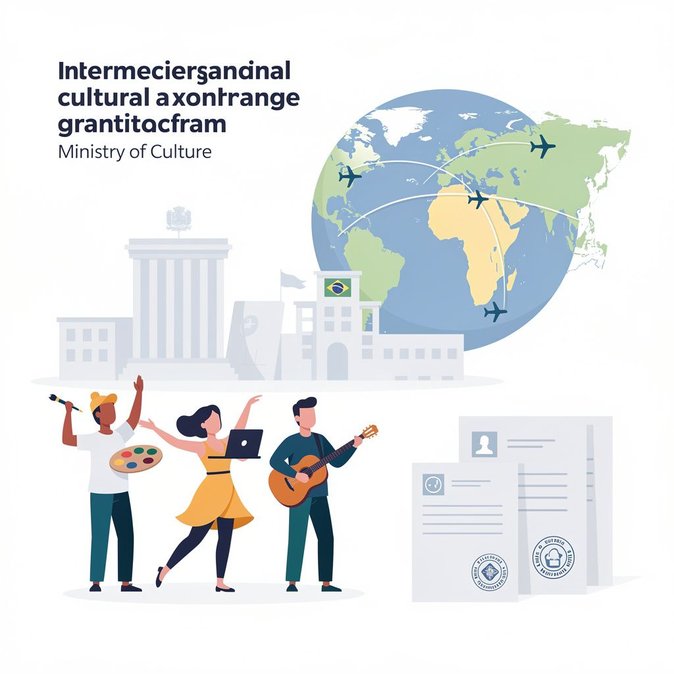
Brazil’s Ministry of Culture (MinC) has released the first preliminary list of projects approved under Intercâmbio Cultural 1/2026, its flagship outbound mobility grant. Posted on 22 July, the notice shows 57 proposals qualified, 13 placed on reserve and 76 rejected or disqualified after technical review. Applicants now have until 24 July to file appeals via the government’s Mapa da Cultura portal. The programme reimburses air tickets, international health insurance and per-diem costs for artists, curators and creative-industry entrepreneurs who represent Brazil abroad for up to 30 days. Typical destinations include film festivals in Europe, residency programmes in Asia and trade fairs such as South by Southwest. Because funding is linked to travel, the call effectively doubles as a streamlined visa-support tool: once selected, grantees receive a MinC diplomatic note that many consulates accept as proof of subsistence and official purpose. Mobility significance is two-fold. First, grants cover not just individuals but small creative enterprises—helpful for start-ups that lack corporate travel budgets. Second, the 2026 notice explicitly allows digital-nomad style “hybrid mobility”, letting awardees extend trips at their own expense for side-projects, provided the official agenda is completed. That flexibility mirrors the growing overlap between artistic and corporate assignments and could serve as a pilot for broader government e-visa rules now under discussion at the Foreign Ministry. For HR teams in creative industries, key next steps are to monitor the final list (expected 30 July) and secure visa appointments early—schengen-area lead times run 6-8 weeks in São Paulo. Companies should also brief travellers on tax-reporting: the grant is classed as non-taxable income only if expense receipts are filed within 60 days of return. Mobility providers can position concierge services around these requirements. Although the budget—R$ 6 million—covers barely 200 trips a year, the programme sets a precedent: it is the first federal call to process 100 % of documentation digitally, including e-signatures for grant contracts. Observers expect similar paperless workflows to appear in forthcoming science-mobility and sport-exchange schemes, easing administrative burdens for Brazilian organisations that send staff abroad.
Source: Ministério da Cultura – Gov.br