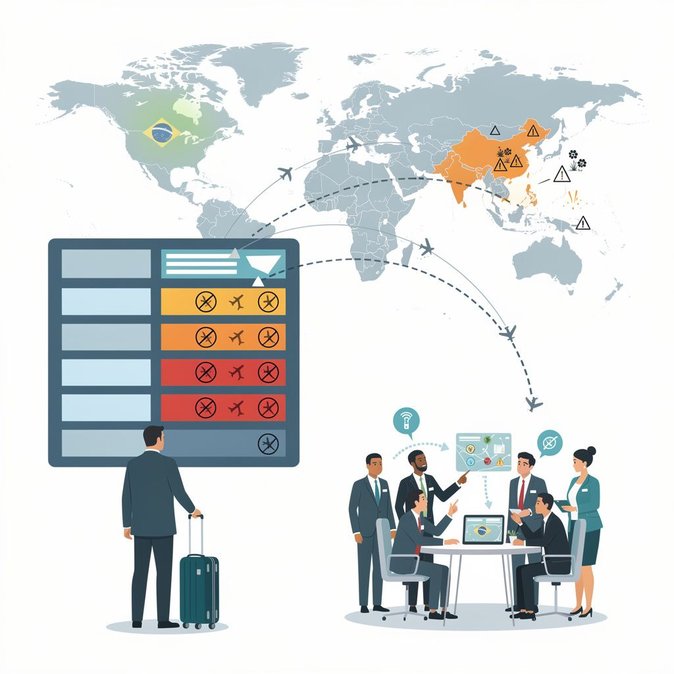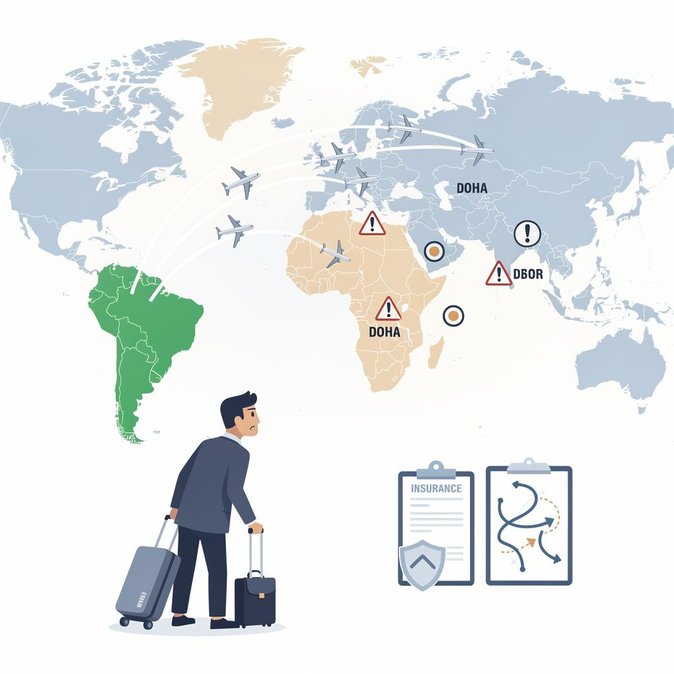
The Brazilian Ministry of Foreign Affairs (Itamaraty) issued an updated consular alert on 23 July 2026 warning Brazilian citizens to postpone all trips to several parts of the Middle East and to avoid non-essential travel even for quick airline connections through the region. In the new grading, Irã, Israel, southern Líbano, the Gaza Strip and Iêmen moved to the highest risk tier (“do not travel”). A second tier now covers Catar, Emirados Árabes Unidos, Jordânia, Kuwait, Bahrein, Arábia Saudita, Síria, Cisjordânia and most of Líbano, advising Brazilians to defer non-essential visits. The ministry emphasised that the alert does not bar embarkation but signals the government’s assessment that security conditions have deteriorated sharply since early July. The timing is significant for corporate mobility managers because Doha and Dubai are two of the main hubs linking Brazil to Asia and Africa. Qatar Airways plans to restore three daily São Paulo–Doha flights on 14 September, and Emirates has already returned to 96 % of its global network. Airlines may keep selling tickets, but the alert puts an onus on employers to reassess duty-of-care policies, check insurance exclusions and brief travellers about possible last-minute flight disruptions, curfews or air-space closures. For personnel already in the region, Itamaraty urges registration with local embassies, avoidance of protests and strict adherence to local security instructions. The note explicitly discourages posting photos or videos that could be deemed sensitive by host governments. Contact numbers for every Brazilian mission in the affected countries were republished, and travellers are told to ensure passports have at least six-months validity in case an emergency exit becomes necessary. Multinational companies should review evacuation vendors, confirm that travel-risk platforms integrate the Itamaraty feed, and verify that remote work contingency plans are in place for employees transiting via Gulf hubs. Because the alert also covers connecting passengers, travel managers may need to re-route itineraries through Europe or the United States until conditions improve. The government indicated that it will continue to update the advisory as intelligence is received, so mobility professionals should monitor the alert daily and document decision-making for compliance purposes.
Source: Melhores Destinos