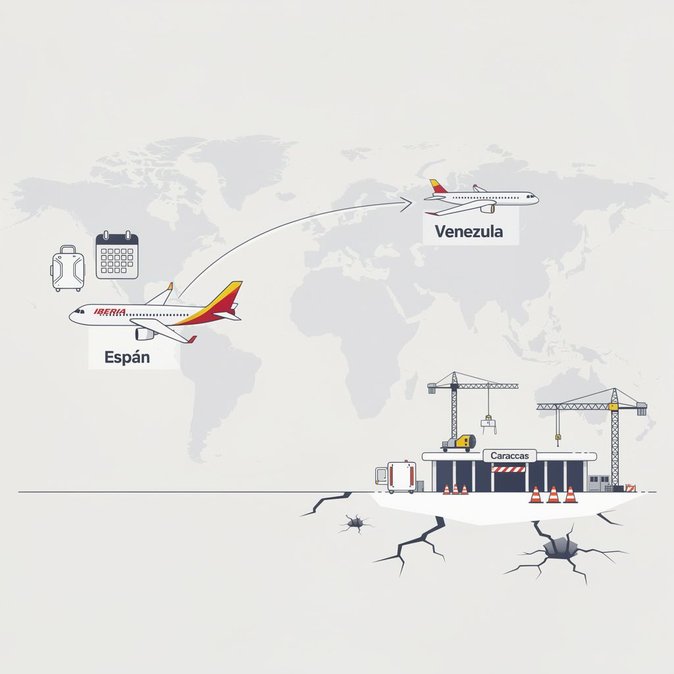
Spanish flag-carrier Iberia has updated its “Latest update of our flights” bulletin to extend flexibility for passengers booked on Madrid–Caracas services through 25 July, after ongoing aftershocks and infrastructure damage at Simón Bolívar International Airport hindered normal operations. The policy allows travellers to move their journey to any date up to 15 August 2026, reroute via Bogotá or Panama City, or obtain a full refund. The move follows fresh assessments published on 23 July by El País and the World Bank estimating economic losses from the twin 24 June earthquakes at US $19.6 billion. Although the airport has reopened with limited capacity, Venezuelan aviation authorities cap hourly movements to allow runway inspections and priority humanitarian flights, triggering a domino effect on Iberia’s network planning. For Spanish corporates with interests in Venezuela’s energy and consumer-goods sectors, the disruption coincides with financial-quarter closes and could delay executive rotations normally scheduled for the first week of August. Several Madrid-based multinationals told FEEX, Spain’s expatriate-management association, that they are activating split-site work arrangements and remote-work contingencies under Spain’s new global-mobility tax framework. Travel-risk consultants recommend that firms advise travellers to carry hard-copy itineraries and ensure return tickets meet the 30-day validity rule enforced by Venezuelan immigration. Travellers re-routing via Bogotá must also check Colombia’s recently tightened yellow-fever vaccination requirements. Iberia’s handling of the crisis illustrates how Spanish carriers are refining their disruption policies in line with EU261 and Spanish consumer-protection rules. In practice, rebooking windows now span several weeks, giving global-mobility teams greater scope to reschedule assignments without incurring extra fare costs.