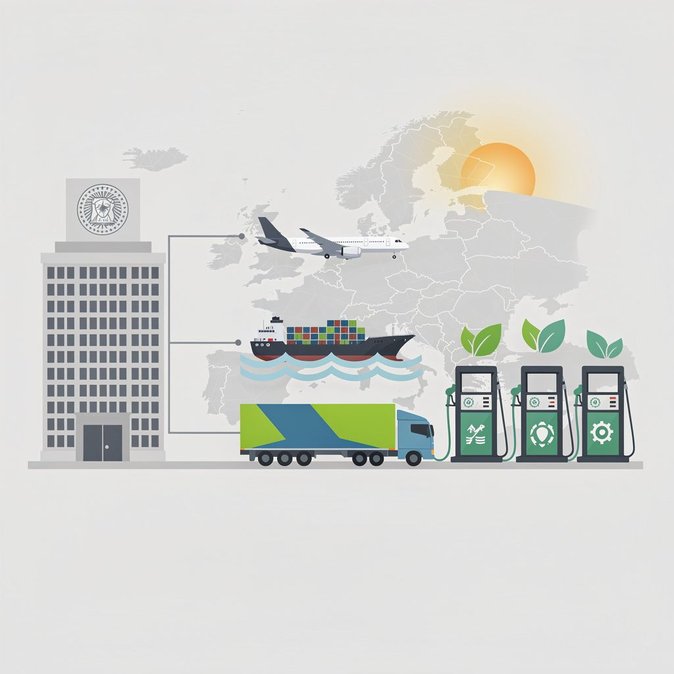
Spain’s Official Gazette (BOE) published Royal Decree 611/2026 on 23 July, introducing legally binding greenhouse-gas-reduction schedules for road, rail, maritime cabotage and—under the EU ReFuelEU framework—aviation. The 79-page text requires fuel suppliers to achieve a 29 % share of renewable energy or, alternatively, a 14.5 % cut in life-cycle emissions across the transport sector by 2030, with mode-specific quotas that rise annually from 2027. For airlines operating in Spain, the decree formally aligns national law with ReFuelEU Aviation, mandating sustainable aviation-fuel (SAF) blending trajectories and allowing surplus advanced biofuel volumes to be counted against road-transport targets. Shipowners on coastal routes must meet separate greenhouse-gas intensity reductions and minimum shares of RFNBOs (renewable fuels of non-biological origin). Corporate fleets will feel the impact through higher biofuel content in diesel and gasoline as suppliers chase sub-targets for advanced biogas and bioalcohols. Mobility managers should factor probable pump-price premiums and new fuel-origin certification requirements into 2027-2030 travel budgets. The decree also empowers the Environment Ministry to cap first-generation crop-based biofuels at 7 % and to tighten that ceiling by ministerial order. Logistics providers applauded the long-term policy certainty but warned that refuelling infrastructure for hydrogen and e-fuels remains patchy, especially on the Atlantic freight corridor. In response, the government earmarked €450 million from the Recovery Plan’s NextGenEU tranche for multimodal alternative-fuel hubs in Seville, Zaragoza and the Basque Port System. Spain joins France, Germany and Denmark in transposing the revised Renewable Energy Directive before the 30 June 2027 deadline, reinforcing the message that multinational firms should accelerate vehicle-fleet electrification and engage suppliers on scope-3 emissions reporting.
Source: Boletín Oficial del Estado