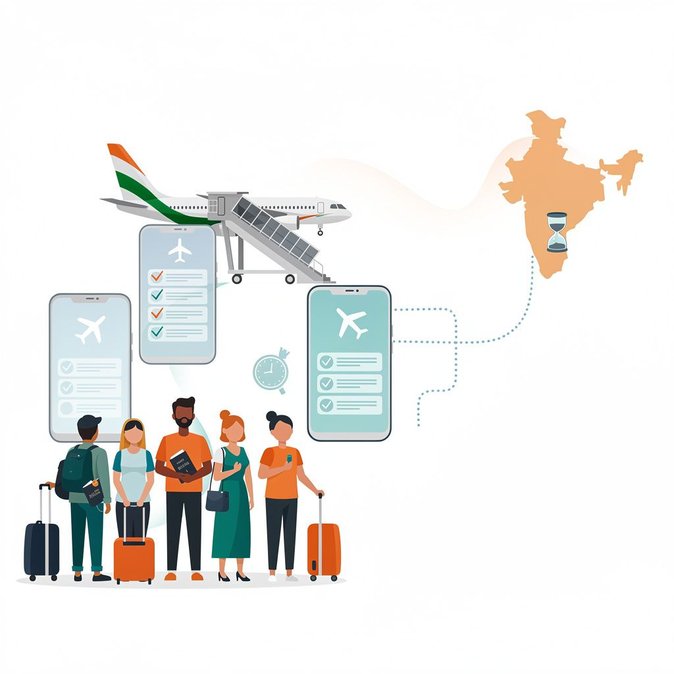
Several Indian missions overseas have issued fresh notices confirming that the physical arrival (disembarkation) card has been fully replaced by a digital e-Arrival Card for all foreign nationals – including Overseas Citizen of India (OCI) card-holders – with immediate effect. The Embassy of India in Dublin was among the first to update its advisory on 22 July 2026, stating that travellers must complete the form online within 72 hours before landing in India. The digital card, accessed via the government’s Air Suvidha 2.0 portal or integrated airline check-in links, captures basic biographic data, itinerary information and a health self-declaration. Once submitted, passengers receive a QR confirmation that must be presented (electronically or on paper) at immigration counters. The Bureau of Immigration says the move aligns India with global best practice and will cut average clearance times by up to 40 percent. For business-travel planners, the change removes one of the last remaining paper forms and simplifies arrival procedures, but requires assignees to have reliable internet access before departure. Corporations are advised to build the e-Arrival step into pre-trip checklists alongside e-visa printouts and FRRO registration rules. Airlines that fail to alert passengers risk fines under India’s Carrier Liaison Programme. The online form accepts group submissions, which is helpful for family dependants on corporate relocation packages, but each traveller still needs an individual QR code. Children under 12 must appear on a parent’s submission. Failure to complete the digital card may lead to secondary screening and manual data entry on arrival, adding 10–15 minutes per passenger. Indian airports handling large volumes of charter traffic have installed self-service kiosks and NFC readers to scan the QR, with Delhi and Mumbai aiming for full Digi-Yatra integration by year-end. The Bureau of Immigration will keep the paper form available for a six-month transition period, but officials say they plan to phase it out entirely by early 2027.