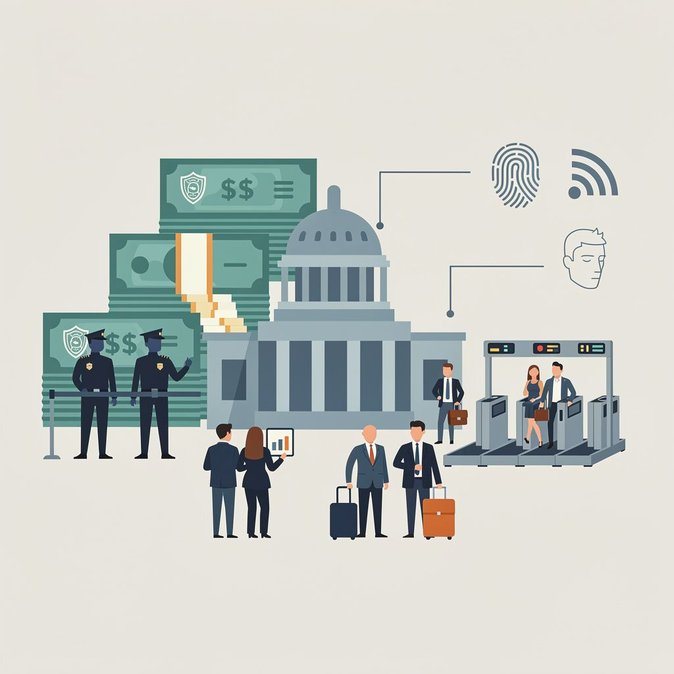
In a July 23 memorandum, the Senate Budget Committee revealed that Immigration and Customs Enforcement (ICE) and Customs and Border Protection (CBP) collectively hold $152 billion in unobligated balances from two recent funding laws—the One Big Beautiful Bill Act of 2025 and the Secure America Act of 2026. Committee staff say the hoard could finance core operations through FY 2029 without additional appropriations. For mobility stakeholders the finding raises the prospect of heightened political scrutiny of how immigration-enforcement agencies process business-related travel programs such as Global Entry, E-Verify and employer I-9 audits. Lawmakers from both parties quickly seized on the report: fiscal conservatives called the surplus proof that ICE can absorb another hiring surge, while Democrats argued the agency should redirect funds to clear the 3-million-case immigration-court backlog instead of expanding detention. Practically, a large unobligated reserve may embolden CBP to accelerate its multi-year traveler-automation projects—including facial-recognition kiosks and the expansion of the eManifest platform at land borders—without waiting for the next budget cycle. Corporate travel managers could benefit from faster primary-inspection lanes, but privacy advocates warn that rapid deployment may outpace transparency safeguards. The Committee will hold oversight hearings in September; witnesses are expected to include the CBP Commissioner and private-sector members of the Homeland Security Advisory Council. Companies that rely on trusted-traveler programs should monitor the debate, which could reshape fee structures or impose new congressional reporting rules on expedited-clearance revenues.