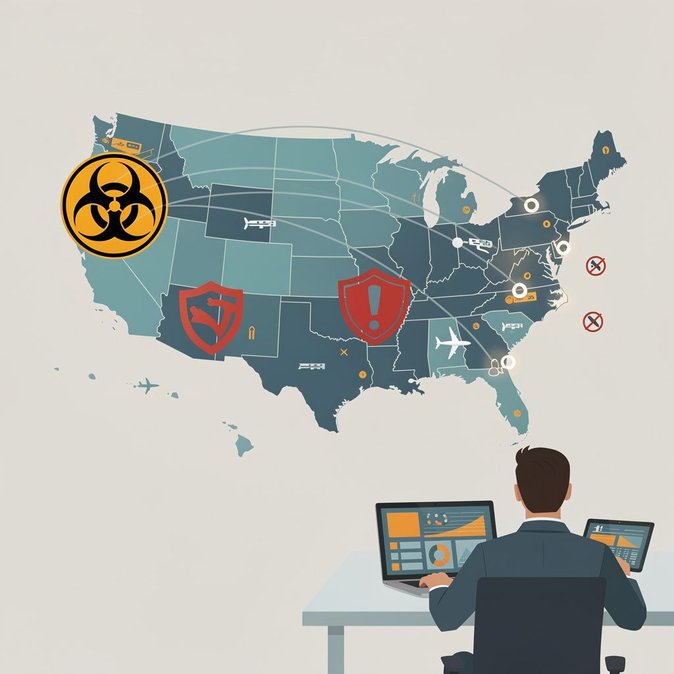
The State Department re-issued its global ‘Worldwide Caution’ on July 22, citing heightened tensions in the Middle East and new public-health restrictions linked to an Ebola outbreak in central Africa. All U.S. citizens who have been in the Democratic Republic of the Congo, Uganda or South Sudan within 21 days must now arrive through one of eight designated U.S. airports for enhanced screening; similar rules already apply to most foreign nationals. Airlines operating through Gulf hubs have begun cancelling or re-routing flights, and corporate security providers report a spike in med-evac inquiries from project sites in Saudi Arabia and Qatar. The advisory also warns that Iranian-backed groups could strike locations worldwide that are perceived as American, including multinational corporate offices. From a mobility standpoint, the dual security-and-health warning means companies must layer epidemiological screening on top of geopolitical risk analysis when moving staff through the region. Travelers who transit Europe en route to the United States after time in DRC, for example, must still enter via the designated U.S. airports—failure to do so could result in costly re-routing at the traveler’s expense. Best practice: enroll all travelers in the STEP program, pre-book flights into the correct airports (Atlanta, Chicago, Dulles, JFK, Newark, LAX, SFO, or Dallas/Fort Worth), and build extra connection time for secondary screening. Firms with expat teams in the Middle East should review crisis-evac plans and confirm local shelter-in-place protocols.