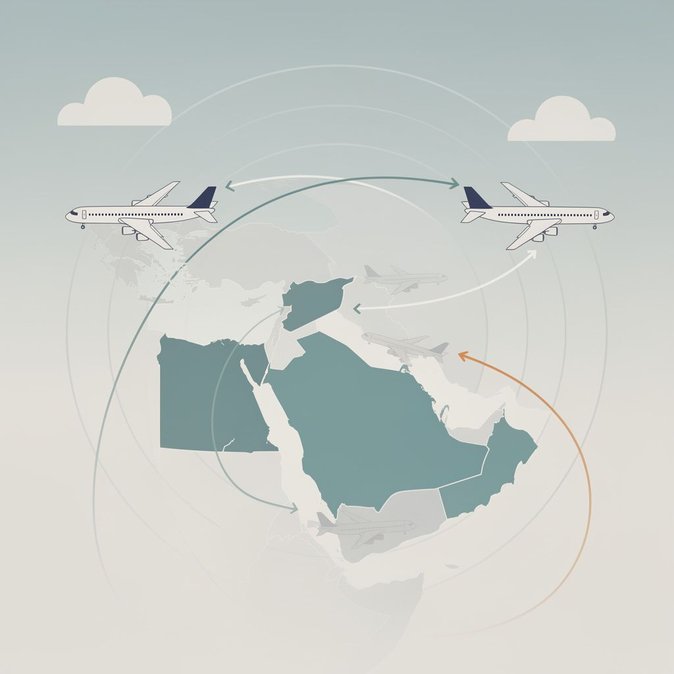
Gulf News reports that the United States, United Kingdom, Canada and Australia all re-issued Middle East travel warnings on the morning of 24 July, advising citizens to prepare for further flight cancellations amid continuing regional volatility. In parallel, Etihad Airways has extended the suspension of its Abu Dhabi–Kuwait (EY 653/654) and Abu Dhabi–Bahrain rotations until 26 July, while flydubai, Air Arabia and Qatar Airways announced additional route cuts. Although operations at Dubai and Abu Dhabi hubs remain broadly normal, the European Union Aviation Safety Agency has prolonged its conflict-zone bulletin for Gulf airspace until 31 August. Industry sources say many carriers are lengthening routings to skirt the Strait of Hormuz, adding up to three hours on some Asia-Europe sectors and pushing up fuel costs. For business-travel managers the immediate priority is real-time traveller communication. Experts recommend that companies reconfirm employees’ contact details with airlines, enable mobile push alerts and advise staff to arrive at airports earlier than usual. Where itineraries rely on tight interline connections, contingency overnights should be considered. Cargo operations are also affected: forwarders report limited belly-hold capacity and warn exporters to book early for temperature-controlled shipments. Insurance brokers note that some underwriters are re-evaluating war-risk premiums for flights over the Gulf, costs that may ultimately filter through to corporate travel budgets. With the Islamic New Year holidays approaching, UAE authorities have yet to issue domestic travel restrictions, but officials continue to urge vigilance and compliance with any future NOTAMs affecting civil aviation routes.
Source: Gulf News