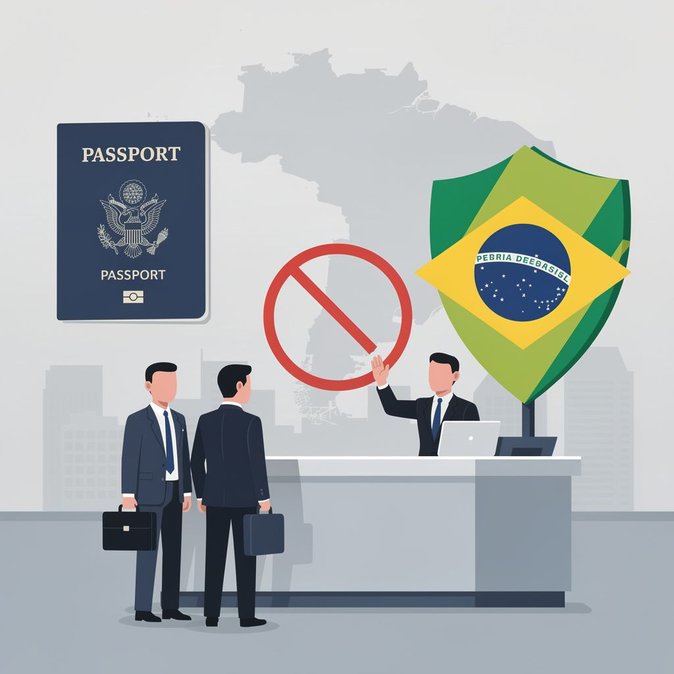
Brazil’s foreign ministry has rejected visa applications from two U.S. government envoys who had planned to travel to Brasília this week to meet opposition figures and question the integrity of the country’s electronic voting system. Brazilian diplomats told Reuters that the officials—whose names have not been disclosed—were part of a delegation organised by the White House’s Office of Political Affairs. The visa refusal comes less than three months before Brazil’s October municipal elections and follows escalating rhetoric from President Donald Trump, who has repeatedly cast doubt on electronic voting worldwide. Brazilian President Luiz Inácio Lula da Silva’s government said in a statement that outside attempts to influence public confidence in the electoral process “threaten national sovereignty and regional stability.” While individual visa denials are common, blocking official U.S. travellers is rare and signals Brasília’s willingness to push back against perceived meddling. Under a bilateral agreement, diplomatic and official passport holders normally enjoy expedited processing; the foreign ministry’s move effectively suspends that privilege for the two envoys. For U.S. businesses, the spat introduces fresh uncertainty ahead of the G20 summit in Rio later this year, where scores of U.S. executives and advance teams will seek visas. Mobility managers should monitor appointment availability at Brazilian consulates and prepare contingency plans, especially for staff involved in political consulting, cybersecurity or election technology. The episode also highlights how American domestic politics can reverberate through visa channels abroad. Analysts warn that other Latin American nations could adopt similar tactics if Washington is viewed as interfering in sensitive domestic affairs, complicating cross-border assignments for U.S. firms.
Source: Reuters