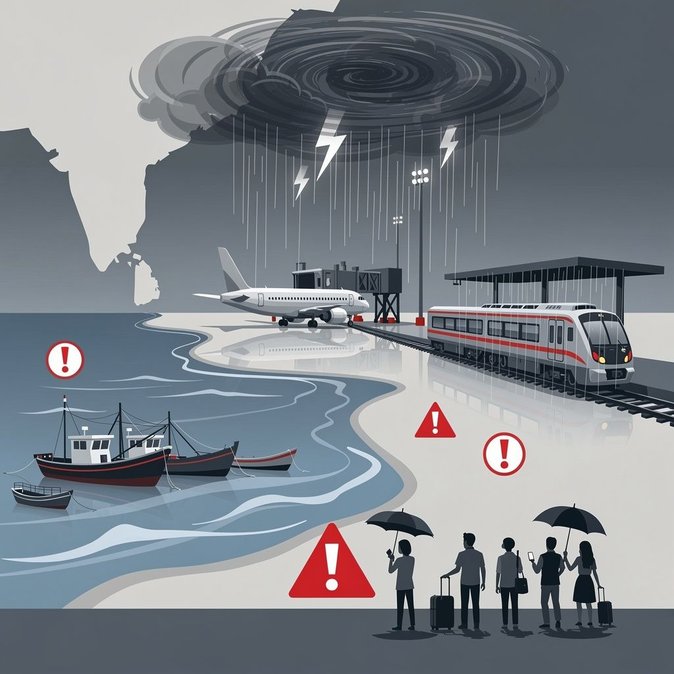
India’s meteorological office (IMD) confirmed on 26 July 2026 that a low-pressure system over the Bay of Bengal has strengthened into a depression and is likely to make landfall between Paradip (Odisha) and Sagar Island (West Bengal) within 24 hours. Fishermen have been barred from venturing to sea, and all Odisha ports have hoisted Local Cautionary Signal III. Two coastal districts—Mayurbhanj and Jagatsinghpur—have closed schools, while Odisha’s disaster-management authority has put rescue teams on standby at Biju Patnaik International Airport. The weather warning poses operational headaches for airlines and railways. Bhubaneswar airport has advised carriers to carry additional fuel because diversions to Kolkata or Visakhapatnam may be required. Indian Railways’ East Coast Zone has already cancelled 14 passenger services and said more could follow if tracks near Balasore flood. Logistics firms moving project cargo to the Paradip petrochemical hub have been told to expect 48-hour delays. Corporate relocation programmes to Bhubaneswar, Cuttack and the mineral-rich hinterland could also be affected. Housing companies report temporary evacuation requests from expatriate families living in low-lying parts of Chandrasekharpur. Mobility managers are advising employees to keep contingency supplies and to monitor the IMD’s Cyclone e-Atlas app for real-time updates. The bigger picture is that India’s monsoon volatility is increasingly intersecting with global-mobility planning. Companies with critical operations along the Bay of Bengal coast are incorporating weather analytics into travel-approval workflows and considering “climate leave” that allows staff to delay non-essential trips without HR penalties. While no airports are officially closed yet, travellers over the next 72 hours should reconfirm flight timings, build slack into itineraries and have alternate routing via Hyderabad or Delhi ready in case the depression intensifies into a cyclonic storm.
Source: The Print (PTI Feed)