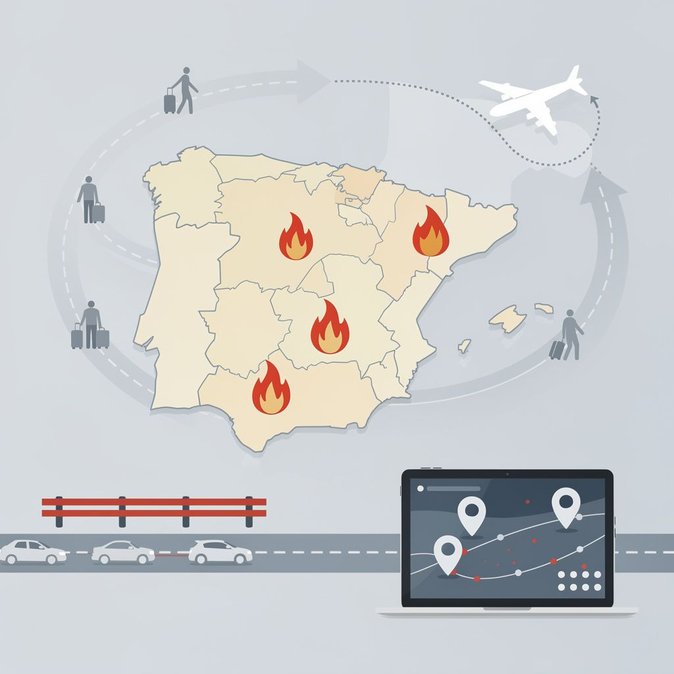
The Directorate-General for Civil Protection and Emergencies (DGPCyE) issued an orange-level alert on 27 July warning of Spain’s fourth—and fiercest—heat wave of the season, forecast to begin on Wednesday 29 July and extend through Sunday 2 August. Temperatures are expected to exceed 44 °C in the Guadalquivir valley and 42 °C on parts of the Mediterranean coast and Canary Islands. For global-mobility teams the alert carries operational consequences: outdoor work restrictions will automatically apply in many regions under Royal Decree-Law 4/2023, meaning assignment schedules in agriculture, construction and logistics may require adjustment. Airlines at Madrid-Barajas and Seville airports have already announced potential weight-restrictions on afternoon departures to compensate for hot-weather performance limits on aircraft. Long-distance road travel will also be affected. The DGT (traffic agency) plans rolling speed limits and has warned of asphalt ‘bleeding’ on sections of the A-4 and A-92. Companies running shuttle buses for expats or crew changes should schedule early-morning journeys and ensure air-con systems are serviced. Rail operator Renfe says track temperatures above 60 °C could trigger speed reductions on conventional lines, extending journey times by up to 20 minutes. Employers must revisit their occupational-risk assessments for mobile staff: Spain’s labour inspectorate can now impose fines of up to €820,000 if workers are exposed to unsafe temperatures without mitigation (shade, hydration, schedule changes). The DGPCyE advises travellers to carry at least 1½ litres of water on long car trips, avoid parking on dry scrubland (to prevent fires) and monitor regional health-service apps for UV-index updates. Insurance providers note an uptick in medical claims from heatstroke among business travellers unaccustomed to Iberian summers. Best practice is to brief newcomers on Spain’s “Plan Calor” protocols, mandate hotel rooms with reliable air-conditioning and allow flexible telework when red-level alerts are issued locally.
Source: Protección Civil y Emergencias