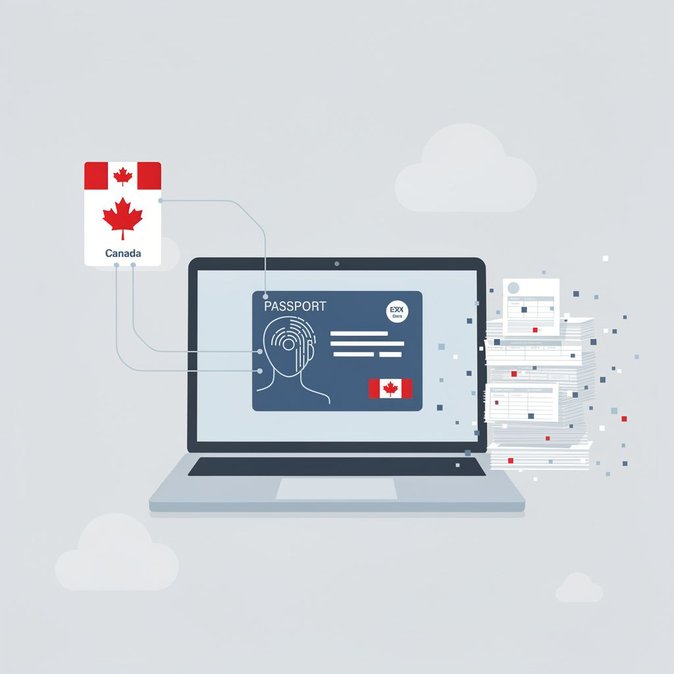
Immigration, Refugees and Citizenship Canada (IRCC) is poised to modernise one of the most-used government travel services: the Canadian passport. At a press conference scheduled for 10:00 a.m. Pacific Time in Vancouver on July 28 2026, Immigration Minister Lena Metlege Diab will outline how Canadians will soon be able to complete a passport renewal—from application to payment and document upload—entirely online. The pilot, which will open first to adults holding an expiring or recently expired passport, eliminates the need to print forms, obtain hard-copy photographs or mail original documents, slashing an estimated two weeks off the current processing time. The move comes after several years of pandemic-driven backlogs that saw routine renewals balloon from the pre-COVID standard of 10 business days to as much as 13 weeks. IRCC says the new platform leverages document-verification AI and encrypted video capture for the photo, allowing applicants to take compliant images on a smartphone. Service Canada offices will still offer in-person support, but officials expect up to 70 percent of renewals to shift online within the first year, freeing counter staff to focus on first-time applicants and urgent travel cases. For global-mobility managers, the change removes a pain point that has complicated Canadian outbound assignments. Companies frequently absorb courier costs and schedule delays while employees wait for their passports to be returned before visas can be stamped. With digital processing, a passport can remain in the traveller’s possession until the day it must be physically surrendered for printing—a step IRCC says will ultimately be handled by secure pickup lockers at major airports. Security has been a key concern. The new system integrates facial-recognition cross-checks with the existing e-Passport photo chip and requires a one-time video “liveness” test. IRCC stresses that no biometric templates will be stored beyond the immediate verification process. Data hosting is confined to Canadian servers that comply with Treasury Board privacy directives. An independent audit by the Office of the Privacy Commissioner is already under way and results will be published before a national roll-out in early 2027. Practically, travellers renewing online will receive a digital confirmation code that can be presented to airlines in lieu of the physical booklet for same-day domestic flights—useful if the booklet is still in production. International carriers are expected to recognise the code once testing with the International Air Transport Association’s Timatic database is complete later this year. Employers should update internal travel-policy language to reference the new process and build in a short transition period while consular posts adapt their visa-issuance procedures.