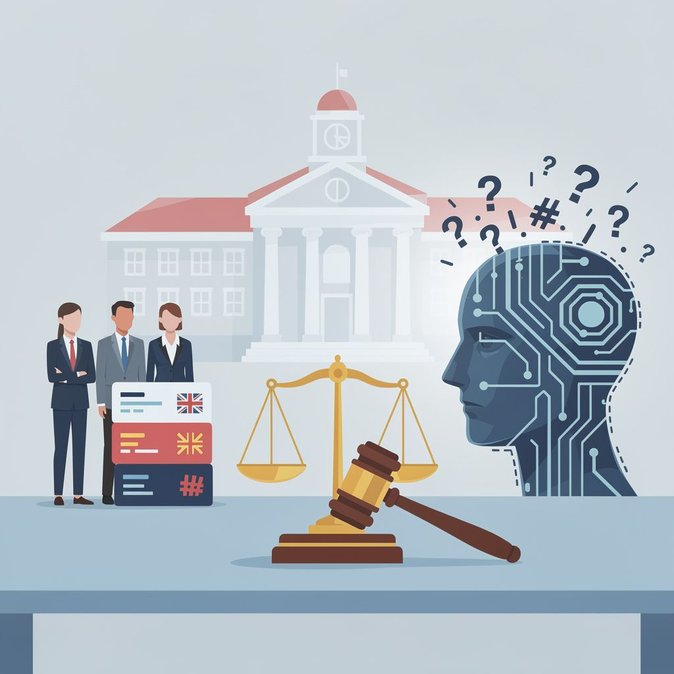
A blistering judgment released on 28 July 2026 reveals that a senior immigration judge has set aside a Home Office refusal of asylum after finding that key passages in the refusal letter were generated by an artificial-intelligence tool and referred to a country-information note that does not exist. The case – anonymised for the protection of the claimant – concerned a North-African woman who applied for refugee status in the UK in 2025. In rejecting her claim, Home Office case-workers cited a 2021 ‘Country Policy and Information Note: Morocco – Women’ which the judge said bore the “hall-marks of an AI hallucination”: the document is absent from the department’s library and contains citations to non-existent sources. The ruling is the first time a court has explicitly criticised the Home Office’s growing use of generative AI to draft decision letters. Evidence presented showed that staff have been encouraged to use an internal large-language-model assistant to cut drafting times by “up to 70 percent”. But the judge warned that deploying unverified AI outputs in life-and-death determinations violates the common-law duty to make inquiries and to give intelligible reasons. For employers and global-mobility managers the episode is more than a legal curiosity. The Home Office has been piloting the same LLM tool in visa‐extension and status-verification workflows, raising concerns that work-permit or settlement applications could be delayed or wrongly refused if synthetic errors creep in. Law firms report an uptick in “mystery documents” cited in recent skilled-worker refusals that they suspect originate from AI drafting. The judgment is likely to reverberate across government. The Cabinet Office’s cross-departmental AI and Data Ethics Secretariat is now expected to issue tighter safeguards, including mandatory human sign-off and provenance checks before any AI-generated text is used in immigration decisions. The Solicitors Regulation Authority already reminds representatives that submitting hallucinated material risks misconduct findings – a warning that now extends to government lawyers. Practically, companies should prepare for more document-requests and slower decision times while the Home Office re-audits AI-assisted cases. Where a refusal appears to quote obscure guidance, advisers should ask for disclosure of underlying sources and, if necessary, challenge the decision on public-law grounds. The case is also a wake-up call for organisations rolling out generative AI in compliance-critical domains: robust governance, traceability and human review are non-negotiable.
Source: The Guardian