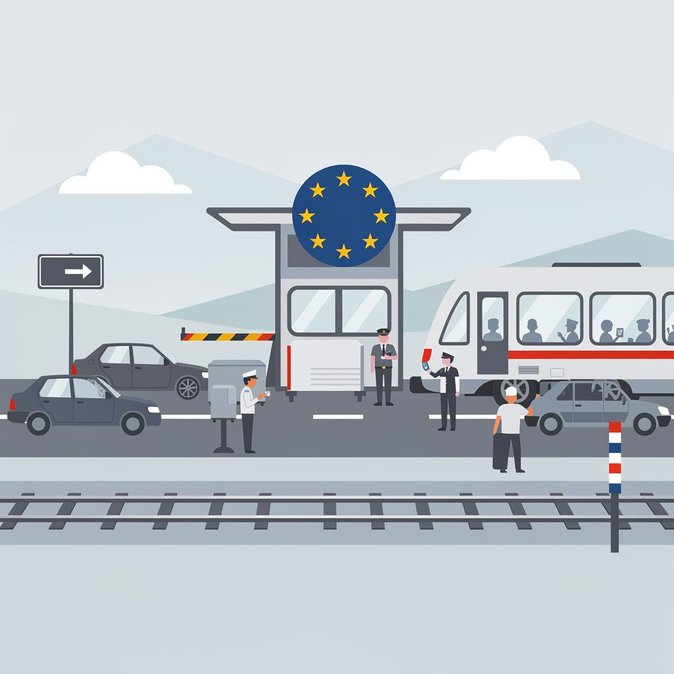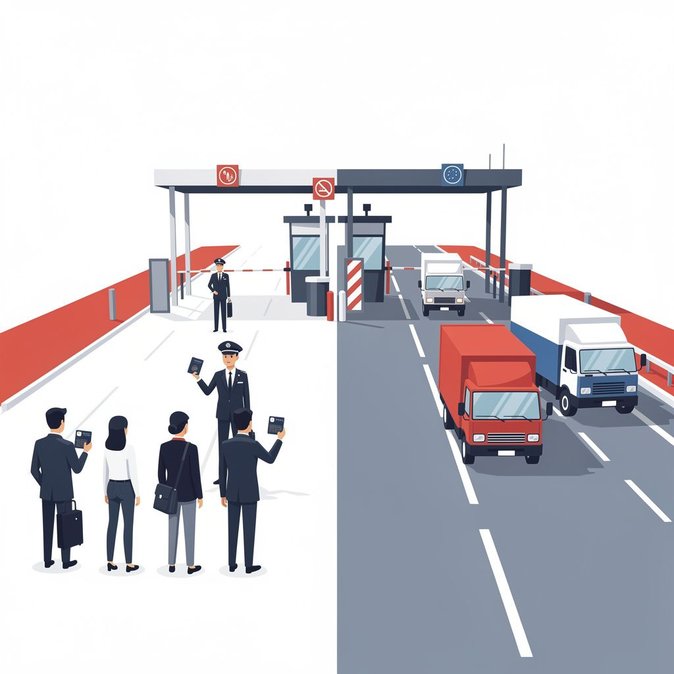
Business travelers and cross-border commuters heading from Czechia into Austria will continue to face police checks for another six weeks. According to the European Commission’s daily Schengen update published on 30 July 2026, Vienna has prolonged its “temporary re-introduction of internal border control” at land and river crossings with the Czech Republic, Slovakia, Hungary and Slovenia until 15 September 2026. Austria first re-installed the controls in mid-June, citing “continuous threats to internal security posed by irregular migration along the Balkan routes” as well as knock-on effects of Russia’s war against Ukraine and heightened Middle-East tensions. While passport-free travel technically still applies within the Schengen area, Article 25 of the Schengen Borders Code allows short-term suspensions in exceptional circumstances. For companies moving staff, the result is spot checks of travel documents, vehicle inspections and occasional queues at smaller rural crossings. In practice, most major motorway crossings (Mikulov/Drasenhofen, Dolní Dvořiště/Wullowitz and Hatě/Kleinhaugsdorf) now funnel vehicles through mobile control lanes manned by Austrian police and customs officers. Employers are therefore advising mobile workers to add 15-30 minutes to their itineraries and to keep either a passport or national ID card on hand. Holders of Czech residence permits are also being asked for proof of residence and, in some cases, employment contracts to rebut suspicions of “irregular migration.” The extension comes at the height of the summer holiday season and just weeks before the start of the autumn trade-fair calendar, when corporate mobility between Prague, Brno, Vienna and Linz typically surges. Logistics firms warn that even short delays can disrupt just-in-time supply chains running through the Czech-Austrian border region. Human-resources managers should alert posted workers that Schengen rules on maximum daily driving hours still apply, even if waiting times at the border increase. For now, there is no indication that Prague intends to introduce reciprocal controls. However, should migration pressure shift northwards, Czech authorities retain the right to invoke similar measures. Companies with regional assignments are urged to monitor updates from both governments and build contingencies—such as flexible check-in windows—into travel policies.