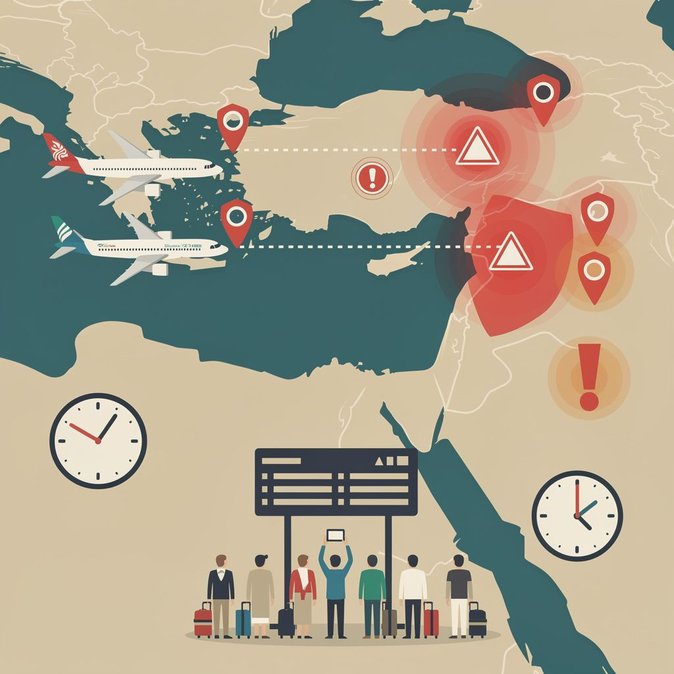
The United States Embassy in Abu Dhabi and the US Consulate-General in Dubai issued a rare security alert late on 1 August 2026 advising American citizens in the United Arab Emirates to exercise increased caution, review personal security plans, and remain attentive to local media for updates. The notice, which was disseminated via the embassy’s official channels and widely shared on social media, cited a heightened threat environment linked to the latest flare-up in hostilities between Iran-aligned groups and US forces across the Gulf. While the advisory stopped short of urging Americans to depart, it encouraged travellers to keep their passports and essential documents within reach and to register with the Smart Traveller Enrollment Program (STEP) so they can receive real-time guidance. Although the UAE has long marketed itself as one of the Middle East’s safest transit and expatriate hubs, its proximity to current flashpoints—coupled with the presence of critical US military assets—has increasingly prompted foreign governments to recalibrate their risk messaging. The security alert follows a series of drone and missile incidents in neighbouring waters that have briefly disrupted regional air-traffic flows this summer. Dubai International Airport (DXB) and Abu Dhabi’s Zayed International Airport (AUH) continue to operate normally, but aviation analysts note that even temporary air-space closures can cascade into network-wide delays, complicating corporate travel itineraries and cargo routings. For globally mobile employees, the practical implications are twofold. First, multinational firms with personnel in the UAE should review emergency communication trees and ensure that evacuation or shelter-in-place protocols are current. Second, travel managers may wish to book fully refundable tickets and build extra lay-over buffers for trips transiting DXB and AUH over the next few weeks, as insurers could designate the wider Gulf as a war-risk zone if the security situation deteriorates further. Human-resources departments should also remind staff that UAE law prohibits disseminating unverified security rumours; sharing misleading content on social media can lead to hefty fines or deportation. Historically, the UAE has weathered previous regional crises with limited operational fallout, thanks to robust missile-defence systems and close coordination with foreign diplomatic missions. Nevertheless, the latest advisory underscores how rapidly the risk calculus for expatriates and business travellers can shift in the current geopolitical climate. Companies are therefore advised to treat the alert as a prompt to stress-test contingency plans rather than a signal to curtail travel outright.