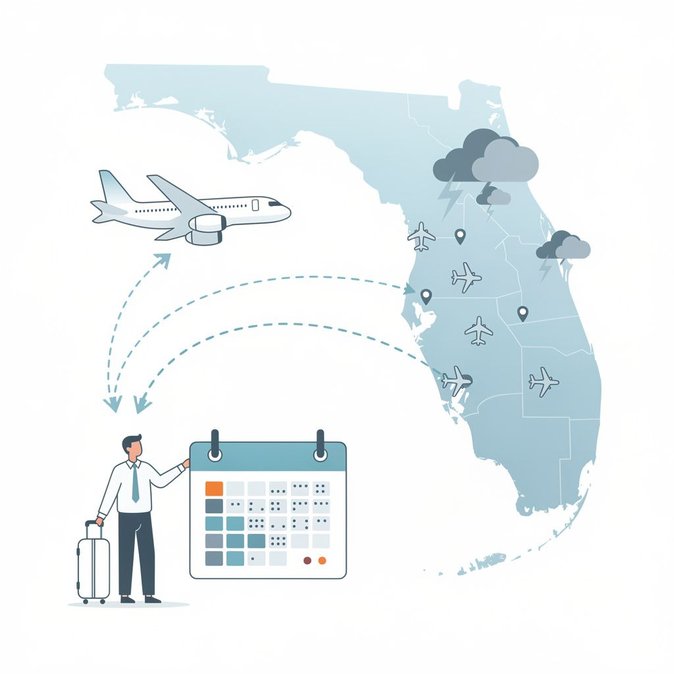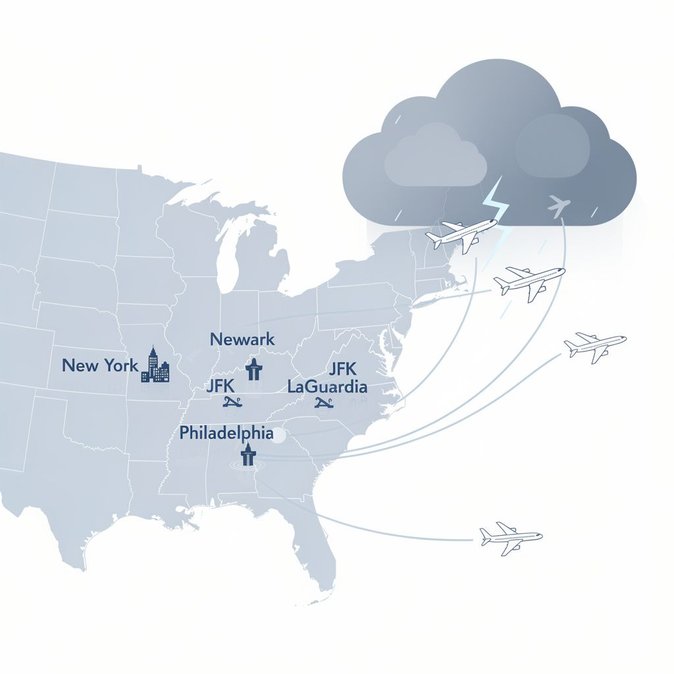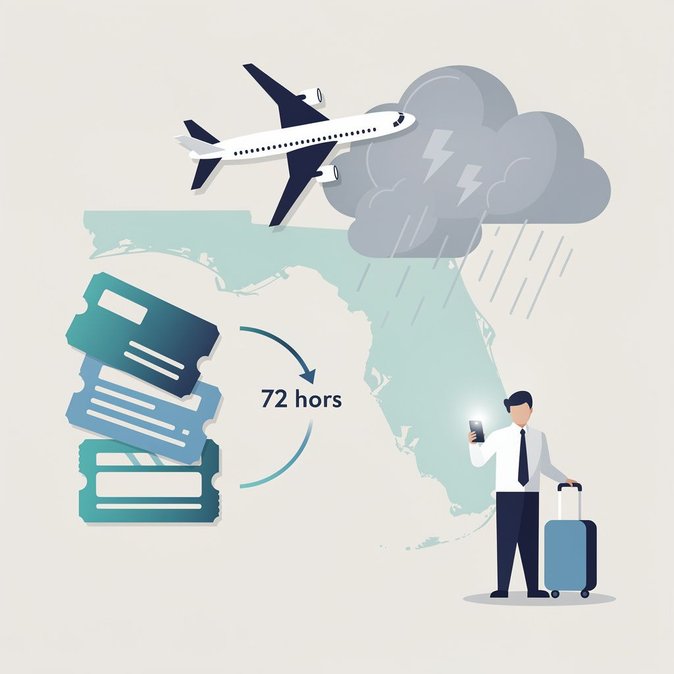
United Airlines quietly activated a system-wide travel waiver late on Sunday afternoon, August 2, after meteorologists warned of a line of slow-moving thunderstorms expected to pound Florida’s Gulf and Atlantic coasts throughout Monday, August 3. The waiver applies to 11 airports—including Orlando (MCO), Miami (MIA), Tampa (TPA) and Jacksonville (JAX)—that collectively handle tens of thousands of United customers each day and serve as key spokes for domestic connections and Latin-America-bound itineraries. Under the waiver, customers holding tickets purchased on or before August 1 for travel on August 3 may voluntarily postpone their flights and rebook without change fees or fare differences, provided travel is completed between August 2 and August 5 and the origin-and-destination city pair remains the same. Corporate travel managers welcomed the move because it gives companies 72 hours of flexibility to reroute personnel or shift critical in-person meetings to virtual platforms without incurring additional airfare costs. Severe weather is the most common trigger for U.S. airline waivers, but Florida’s summer storms are uniquely disruptive: convective cells can form suddenly, saturating already congested airspace and creating a knock-on effect up the East Coast and into major Midwest hubs. United said it is proactively up-gauging aircraft on the afternoon of August 4 to clear any backlog once the storms pass—a tactic that has helped the carrier recover more quickly after recent weather events at Houston and Chicago. While the waiver mitigates financial pain for travelers, experts caution that seat availability will tighten quickly as displaced passengers scramble to rebook. Companies with mission-critical travel are being advised to make preliminary back-up bookings now and remind employees to monitor flight status alerts. Travelers who must fly on August 3 should expect ground-delay programs, extended taxi waits and possible diversions to secondary airports such as Savannah or Birmingham. For mobility teams, the episode underscores the importance of embedding airline waiver monitoring into duty-of-care programs. “A same-day waiver can save a relocation budget thousands of dollars in penalties,” notes travel-risk consultant Gina Park. “But only if HR and travelers know about it in time to act.” United’s waiver bot, which automatically posts new waivers to popular forums minutes after they are filed, is fast becoming a go-to source for real-time disruption intelligence.