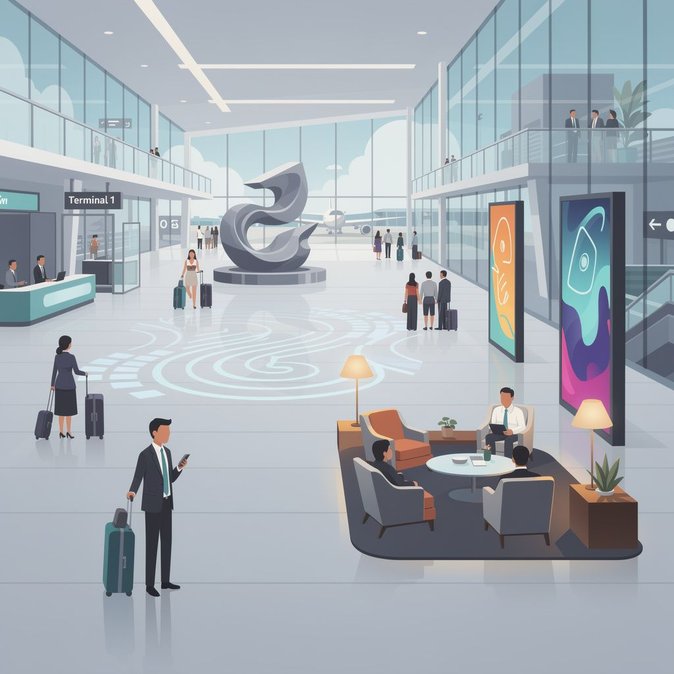
The Airport Authority Hong Kong (AAHK) has kicked off the “Hong Kong International Airport Culture & Arts Festival 2026”, the first time the event spans both the newly-opened Terminal 2 and the existing Terminal 1. The three-month programme, unveiled on August 4, is themed “Hong Kong-Shanghai Twin-City Fusion” and transforms arrival halls into immersive streetscapes inspired by Hong Kong tong-lau and Shanghai shikumen architecture. Large-format digital art walls, photography exhibits and pop-up stages will host more than 40 weekend performances ranging from Canton-pop classics and Shanghai jazz to youth orchestras and contemporary dance. AAHK chief executive Vivian Cheung told the opening ceremony that the airport is positioning itself as “more than an aviation hub – a cultural gateway that encourages travellers to linger and connect.” The festival is timed to capitalise on the mid-summer corporate travel peak and to showcase Terminal 2, whose phased opening in May restored the airport’s pre-pandemic processing capacity. The new terminal’s centralised immigration hall and expanded e-Channel facilities have already cut average arrival processing times by 18 per cent, according to airport statistics. For global mobility managers, the festival has several practical implications. First, passenger flows will be re-routed within arrival and departure zones to accommodate art installations; companies should advise travellers to follow updated way-finding signage and allow a 5-10 minute buffer when connecting to ground transport. Second, AAHK has opened pre-bookable “Art Discovery Walks” that can double as informal networking opportunities for visiting executives. Larger corporate groups transiting through Hong Kong can request private tours that finish in Terminal 2’s new business-class kerb-side check-in zone, offering a convenient soft-landing for roadshows and incentive groups. The festival also signals a broader trend: airports in Asia-Pacific are layering cultural programming onto infrastructure upgrades to differentiate the passenger experience. Singapore Changi’s Jewel complex set an early benchmark and Seoul Incheon now hosts K-pop showcases landside. By positioning the twin-terminal complex as a bi-city cultural bridge, Hong Kong is reinforcing its role as a regional connector just as new routes to Seattle, Riyadh and Astana come online in Q4 2026. Finally, mobility teams should note that crowd levels in the arrival halls will be higher on festival weekends (Aug 4-23, Fri-Sun). Travellers on tight itineraries may prefer express immigration e-Channels, while those with longer layovers can take advantage of the curated programmes. AAHK has published real-time terminal maps and queue-time forecasts in its mobile app to help business travellers plan accordingly.