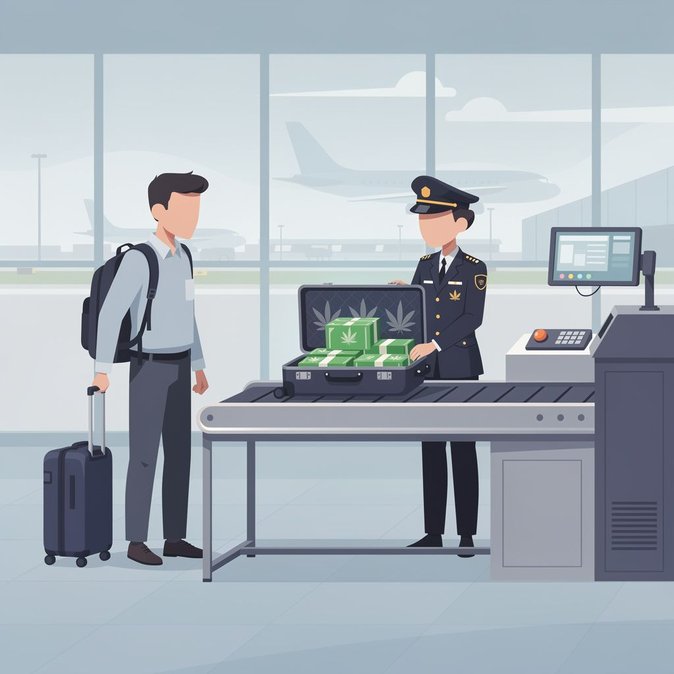
Hong Kong’s tightening border security protocols were on full display late on 3 August when Customs officers intercepted a 34-year-old American passenger arriving from New York and discovered 33 kilograms of suspected cannabis flower concealed in two checked suitcases. Officials estimate the haul to carry a street value of roughly HK$6.8 million. The arrest took place during routine X-ray screening in the arrivals hall at Hong Kong International Airport (HKIA). According to Customs, officers noticed irregular images on the scanner and manually opened the bags, finding multiple vacuum-sealed packages of herbal material. The traveller was immediately detained on suspicion of trafficking a dangerous drug under the Dangerous Drugs Ordinance. If convicted, he faces a maximum penalty of life imprisonment and a HK$5 million fine. The operation comes amid a summer traffic surge: passenger volumes at HKIA have rebounded to around 85 percent of pre-pandemic levels, and authorities have redeployed canine teams and installed additional millimetre-wave body scanners at the green channel to combat smuggling attempts. Hong Kong maintains a zero-tolerance policy toward cannabis, which remains a Schedule 1 substance; the SAR’s rules differ sharply from several US states that have legalised recreational use. Travellers unfamiliar with local narcotics laws risk severe consequences even for substances that are legal at their point of origin. For corporate mobility managers, the case is a reminder to brief relocating staff and short-term assignees on Hong Kong’s strict drug regulations and to review luggage-screening policies with travel providers. Employers should also note that employees detained for drug offences can face lengthy legal proceedings, jeopardising project timelines and immigration status. Companies are advised to maintain emergency protocols, including access to legal counsel and crisis-communication plans, for staff transiting Hong Kong. Customs says it will “continue intelligence-led operations” throughout the peak travel season and encourages the public to refrain from carrying unknown items on behalf of third parties. Additional spot-checks are expected around the Mid-Autumn Festival exodus in September, when daily arrivals traditionally top 200,000.
Source: RTHK