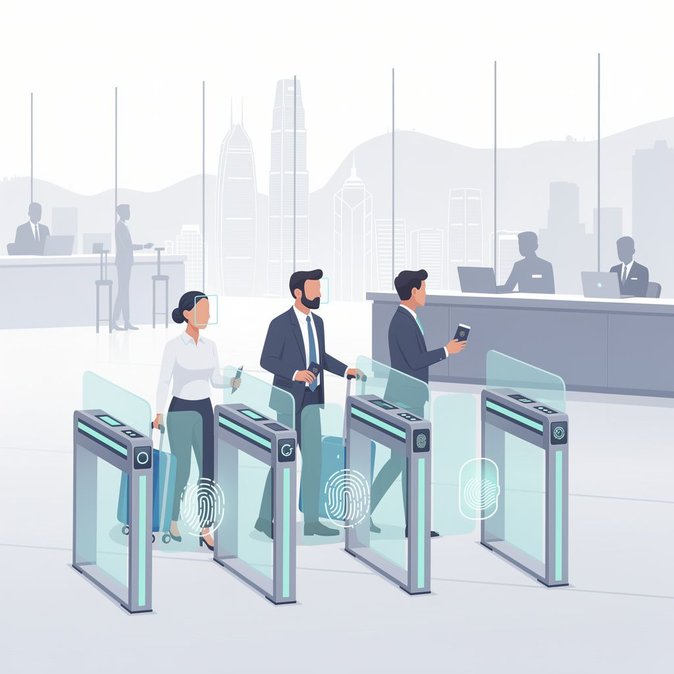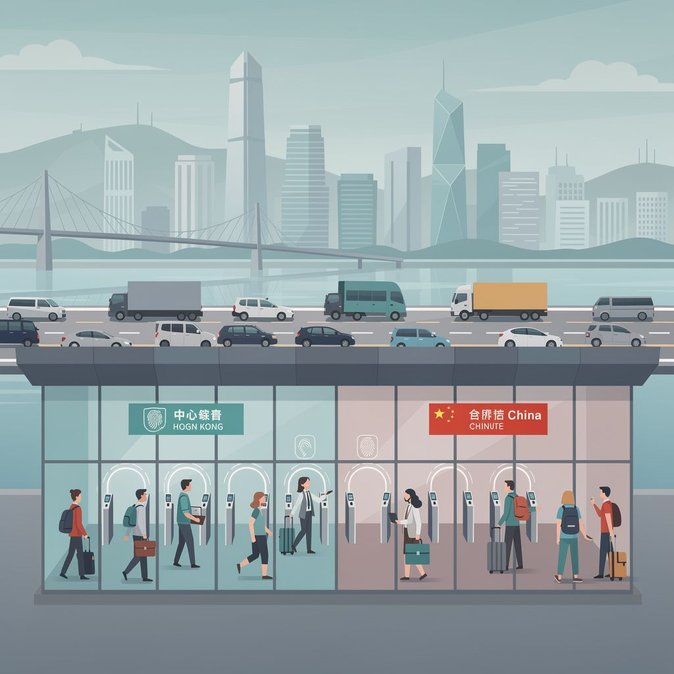
Hong Kong took a decisive step toward stream-lining cross-boundary mobility on 1 August when the President of the Legislative Council, Dr Starry Lee, led 37 lawmakers to the newly completed Huanggang Port Building Hong Kong Port Area for a first-hand look at its passenger and vehicle clearance facilities. Guided by the Security Bureau and senior Immigration and Customs officers, the delegation toured the Public Transport Interchange, Passenger Clearance Hall, on-board immigration hall and purpose-built ‘joint one-stop’ vehicle lanes. The redeveloped port, which sits on the Huanggang–Lok Ma Chau corridor, has been designed as the Greater Bay Area’s most important 24-hour land control point. Crucially, it adopts a co-location model with a novel “collaborative inspection and joint clearance” system: travellers queue only once, undergo a single biometric face-scan and document check, and the data are simultaneously shared with Hong Kong and Shenzhen authorities. Officials told legislators that the end-to-end clearance time for most passengers will fall from about 30 minutes today to roughly 5 minutes once the port opens—an 80 percent efficiency gain that is expected to benefit more than 80,000 daily commuters, cross-border students and businesspeople. For corporate mobility managers, the upgrade promises faster crew rotations, smoother same-day business trips and more predictable arrival times for time-sensitive cargo drivers. Road hauliers will see similar benefits: the ‘five-party inspection’ vehicle system collects a driver’s temperature, travel documents, facial image and fingerprints in one go before transmitting the package to five separate Hong Kong and Shenzhen agencies—slashing dwell times and reducing idling emissions at the frontier. Lawmakers pressed officials on public-transport connectivity and contingency planning. The Transport Department confirmed that franchised buses, green minibuses and 24-hour taxis will be staged at the Port’s new interchange from day one, and that electronic tolling has been integrated with Hong Kong’s HKeToll and Shenzhen’s ETC networks. Members also urged robust crowd-management drills before the first major holiday peak to avoid the bottlenecks seen during the Easter rush at neighbouring ports. The visit underscored how deeply Hong Kong’s border strategy is now intertwined with the Greater Bay Area’s economic ambitions. Once open, Huanggang’s one-stop channels will complement the Northbound Travel for Hong Kong Vehicles scheme and the upcoming ‘seamless e-Channel’ pilot at the Hong Kong–Zhuhai–Macao Bridge, giving companies a growing menu of rapid-clearance options. With Shenzhen’s high-tech parks less than 15 minutes away and the Qianhai Cooperation Zone expanding, mobility specialists expect the port to become a cornerstone for talent shuttles, just-in-time logistics and cross-border R&D teams.
Source: HKSAR Government Press Release