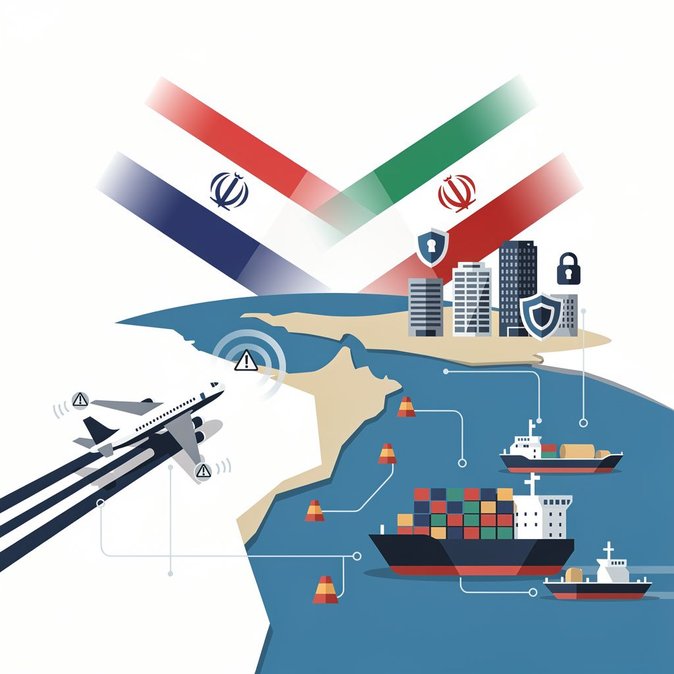
Beyond the immediate inconvenience of cancelled flights, the widening US-Iran confrontation is reshaping the risk calculus for everyone who lives and works in, or transits through, the Emirates. In an extensive explainer published on September 15, Gulf News traces knock-on effects that range from shipping insurance to airline route economics. Maritime tracking data shows crude-oil tanker traffic through Hormuz inching upwards after weeks of near-paralysis, yet volumes remain well below the pre-war norm. Higher insurance premiums for hulls and cargoes are filtering into global supply chains, raising costs for UAE importers—from supermarket produce to aircraft spare parts. The US State Department has, meanwhile, kept the UAE at Level 3 “Reconsider Travel”, and Australia downgraded its advisory only slightly this week. For mobility managers, the guidance is clear: stay agile. Companies should maintain updated employee location databases, reinforce travel-approval protocols and ensure that evacuation vendors can still obtain landing slots at UAE airports. The report notes that Etihad and Emirates have continued skeleton services to Bahrain and Kuwait—critical lifelines for regional commuters—while foreign carriers such as Air Canada and British Airways have pushed resumption dates well into Q4. The article also highlights a growing sanctions web: on September 14 the US Treasury black-listed Russia’s VTB Bank for helping Iran evade restrictions, illustrating how secondary sanctions can quickly ensnare payroll or per-diem transfers routed through third-country banks. Finance teams should screen counterparties afresh before reimbursing employee expenses. Finally, the piece offers practical tips for travellers: verify bookings on airline apps, allow extra time for road checkpoints that sometimes appear around strategic sites, and monitor multiple information sources rather than relying on a single push notification.
Source: Gulf News